
At 3 p.m. on March 4th, the 14th National Committee of the Chinese People's Political Consultative Conference opened at the Great Hall of the People. The conference will conclude on March 11th, with a duration of 7 days. The 14th National People's Congress Fourth Session will open on March 5th and conclude on the afternoon of March 12th, lasting for 8 days.
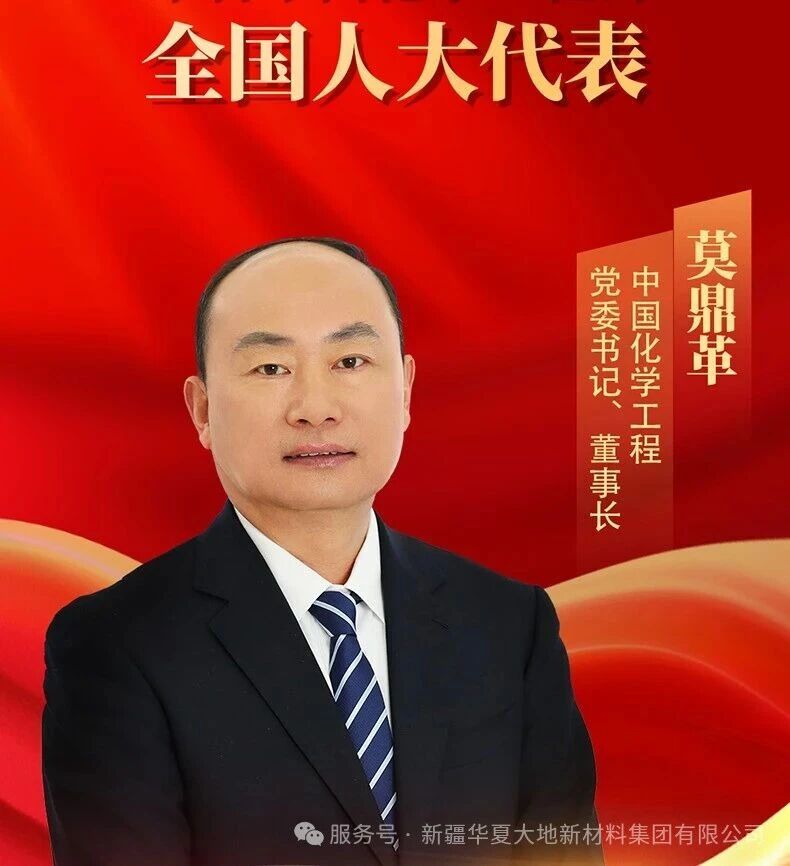
It is reported that during this year's "Two Sessions" (National People's Congress and National Political Consultative Conference), the 14th National People's Congress representative, the Party Secretary and Chairman of China Chemical Engineering, Mo Dingge, will submit a proposal titled "Suggestions on Accelerating the High-Quality Development of the Biodegradable Plastic Industry".
Plastic waste can persist for hundreds of years, seriously affecting the ecological environment, threatening biodiversity and human health. However, biodegradable plastics can be completely decomposed, playing a significant role in reducing white pollution. China regards biodegradable plastics as one of the directions for the development of national strategic emerging industries. Currently, the raw materials for biodegradable plastics (including PBAT, PLA, PBS, etc.) have a production capacity of over 2 million tons per year. More than 30 provincial administrative regions across the country have released relevant implementation plans or action plans for plastic pollution control. In many fields such as disposable plastic bags, tableware, agricultural plastic films and express packaging materials, biodegradable plastic products have the conditions to replace non-degradable disposable plastic products.
Mo Dingge pointed out that currently, the process of plastic pollution control in China has slowed down. The biodegradable materials industry still faces new difficulties and challenges during its development, such as an incomplete regulatory and standard system, insufficient market supervision, the need for enhanced technological innovation, and difficulties for upstream and downstream enterprises in their development. This has led to difficulties in the implementation and enforcement of the "plastic ban" policy, a less-than-expected development of the biodegradable materials industry, and a relatively low industry capacity utilization rate.
To promote the full implementation of the national "plastic ban" during the "14th-15th Five-Year Plan" period, to steadily advance the plastic pollution control work, to accelerate the high-quality development of the biodegradable material industry, and to promote the green and low-carbon transformation of the traditional plastic products industry, Mo Dingge put forward four suggestions.
First, strengthen the top-level design of industrial development. Release the development plan for biodegradable materials industry, clearly defining the specific implementation paths and phased goals for industrial development. Formulate laws and regulations (with corresponding penalties) to prohibit non-degradable disposable plastic products, implement a list management system and expand the scope of the list (such as dust covers, etc.) in a timely manner, and strengthen the comprehensive governance of plastic pollution.
Second, establish and improve the industry standard system and regulatory mechanism. Improve the standards for biodegradable plastic products, include products with partial degradation such as photo-oxidation degradation and plasticizer-resistant plastics in the elimination product list, and implement special identification and traceability systems (traceability codes) for biodegradable plastics. Clearly define the regulatory responsibilities of each government department, and adopt measures such as cross-departmental joint law enforcement to form effective supervision, maintaining a fair, healthy and orderly market environment.
Thirdly, accelerate the rapid development of industry technological innovation. Establish a national special fund to support joint research efforts by leading enterprises, "chain leaders" and research institutions, with a focus on supporting forward-looking technology research, key technology breakthroughs and innovative application demonstration projects for biodegradable plastics. Increase support for enterprises' application for research and development projects, and promote the development of new products and application scenarios of biodegradable plastics.
Fourth, support the coordinated development of upstream and downstream enterprises. Guide upstream and downstream enterprises to gather in the park to form a complete industrial chain. Implement preferential policies in terms of finance, taxation, and finance (such as tax refunds, green loans, government procurement, freight subsidies, etc.) to support biodegradable plastic raw material enterprises; increase the promotion and subsidy efforts for fully biodegradable films, dust nets, etc.; promote the green and low-carbon transformation of traditional plastic product industries.