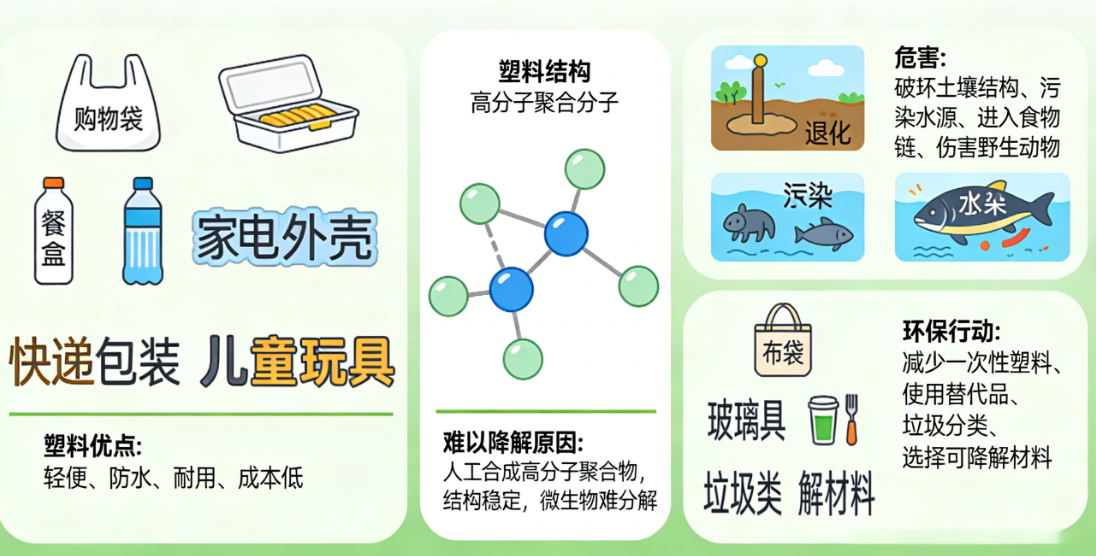

Plastic is a ubiquitous and commonly used material in our lives. It is lightweight, waterproof, durable and cost-effective. From shopping bags, lunch boxes, beverage bottles, to the exteriors of household appliances, courier packaging, and children's toys, it permeates every aspect of our daily life, greatly facilitating modern living. However, at the same time, plastic has brought about an irreversible environmental problem - it is extremely difficult to be naturally decomposed.
The main component of plastics is synthetic high-molecular polymers. These polymers have a tightly and stably structured molecular structure, and few microorganisms in nature can decompose such chemical structures. Therefore, when ordinary plastics are discarded, they usually take hundreds or even thousands of years to gradually decompose. During this period, they will persist in the soil, rivers and oceans, causing shocking white pollution.
Plastic pollution has a wide range of negative impacts on the ecological environment:
On land, discarded plastics can damage the soil structure, preventing plants from absorbing water and nutrients, leading to land degradation. Once they enter rivers, lakes and oceans, plastics will gradually break down into tiny microplastics, which are mistakenly ingested by fish, shrimp, shellfish and other organisms, entering the food chain and potentially endangering human health. Many marine organisms, seabirds and land animals often suffocate or have their digestive tracts blocked due to swallowing plastic bags or nets, and may even die in agony. Plastic waste can also clog drainage systems, exacerbating urban flooding. Improper incineration over a long period can release harmful gases, polluting the air.
To alleviate plastic pollution, more and more people are adopting environmentally friendly lifestyles: reducing the use of disposable plastic bags and plastic utensils, bringing their own cloth bags or eco-friendly bags when shopping; trying to choose recyclable alternatives such as glass, stainless steel, and paper; actively participating in garbage sorting to enable recyclable plastics to be reused; and at the same time supporting the use of environmentally friendly materials like degradable plastics, straw utensils, and bamboo products.
Protecting the environment begins with reducing plastic waste. Even a small action can significantly lighten the burden on our planet.