
On March 12, 2026, the Fourth Session of the 14th National People's Congress held its closing meeting at the Great Hall of the People. The meeting voted to adopt the "Ecological Environment Code of the People's Republic of China".
The Ecological Environment Code is the second law in China to be named as a "code".
The "Ecological Environment Code (Draft) of the People's Republic of China" was submitted to the Fourth Session of the 14th National People's Congress for deliberation on March 5th. It consists of 5 parts and 1,242 articles. The parts are: General Provisions, Pollution Prevention and Control, Ecological Protection, Green and Low-Carbon Development, Legal Liability, and Supplementary Provisions.
The "Ecological Environment Code" stipulates specific administrative penalties for behaviors such as failure to comply with the regulations on the production, sale, and use of disposable plastic products (previously, the "Solid Waste Law" only had penalty provisions for the improper use of non-degradable plastic bags and other disposable plastic products).
Specifically as follows:
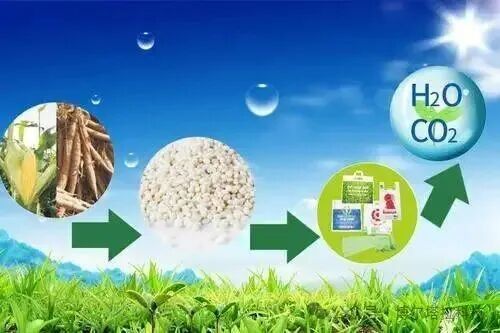
The state legally prohibits and restricts the production, sale, and use of non-biodegradable plastic bags and other disposable plastic products. It encourages and guides the reduction of the use of and active recycling of disposable plastic products, and promotes the application of recyclable, easily recyclable, biodegradable, and harmless alternative products.
The operating units of commercial retail places, e-commerce platform enterprises, express delivery enterprises, and food delivery enterprises shall, in accordance with the provisions of the state, report the usage and recycling of disposable plastic products to the commerce and postal management departments.
Those who violate the provisions of this law and fail to comply with the national regulations on prohibiting and restricting the production, sale of non-biodegradable plastic bags and other disposable plastic products shall be ordered by the market supervision department to stop production and sales, confiscate the illegal produced and sold products, and be fined one to three times the value of the illegal produced and sold products; if there is illegal income, the illegal income shall also be confiscated; if the circumstances are serious, their licenses shall be revoked.
Those who violate the provisions of this law and fail to comply with the national regulations on prohibiting and restricting the use of non-biodegradable plastic bags and other disposable plastic products shall be ordered by the commerce, postal, and other relevant departments to make corrections according to their respective duties, and be fined one to ten thousand yuan by the enterprises and institutions, and five hundred to five thousand yuan by other producers and operators. Those who fail to report the usage and recycling of plastic bags and other disposable plastic products in accordance with the state regulations shall be punished in accordance with the provisions of the preceding paragraph.
The "Ecological Environment Code" also clearly states:
The state encourages and supports agricultural producers and operators to use biodegradable agricultural films; comprehensively utilize straw, remove high-pollution-enriching straw;
Prohibit the production, sale, or use of agricultural inputs that are explicitly prohibited by the state.
The state takes effective measures to encourage research, development, production, sales, and use of agricultural films that are biodegradable and harmless in the ecological environment, and encourages and supports units and individuals to recycle agricultural input packaging waste and agricultural films.
The state promotes energy conservation, carbon reduction, and efficiency improvement, strengthens the clean and efficient utilization of fossil energy and safe and reliable orderly substitution, vigorously develops non-fossil energy, steadily promotes the green and low-carbon transformation of energy, and加快建设 clean, low-carbon, safe and efficient new energy system, and加快建设 energy powerhouses.
The state promotes the development of green and low-carbon industries, nurtures and expands emerging industries such as new energy and biomanufacturing, builds a green manufacturing system and service system, and gradually increases the proportion of green and low-carbon industries in the total economic volume.
State organs and other public institutions using fiscal funds shall lead by example in implementing the green and low-carbon concept, practice frugality and oppose waste, promote green office and green procurement, use green and low-carbon products, and play a leading role in promoting green and low-carbon transformation.
Enterprises should increase the research and development, promotion, and application of green and low-carbon technologies and products, promote the greenization of production and operation activities, improve resource utilization efficiency, reduce the generation and emission of pollutants and greenhouse gases, and consciously fulfill the social responsibility of green and low-carbon development.
Citizens should enhance the awareness of green and low-carbon, actively participate in green consumption, green travel, "plate recycling", and garbage sorting and other green and low-carbon activities, oppose extravagance and waste, and form a civilized and healthy lifestyle and consumption model.
The state encourages producers and operators of products to carry out green design, promote the application of green design.
The design of products and packaging materials should consider their impact on human health and the environment during the life cycle, and preferentially choose non-toxic and harmless, easily degradable or easily recyclable solutions.
The state encourages producers and operators of products to use green packaging and reduced packaging.
The state limits the production and sale of disposable products on the premise of ensuring product safety and hygiene.
The tourism and accommodation industries shall not provide disposable products by default.
State organs, enterprises and institutions, social groups, etc. in office premises should reduce the use of disposable products. The "Ecological Environment Code" will come into effect on August 15, 2026. At the same time, the following ten laws will be abolished: the "Environmental Protection Law of the People's Republic of China", the "Environmental Impact Assessment Law of the People's Republic of China", the "Marine Environmental Protection Law of the People's Republic of China", the "Air Pollution Prevention and Control Law of the People's Republic of China", the "Water Pollution Prevention and Control Law of the People's Republic of China", the "Soil Pollution Prevention and Control Law of the People's Republic of China", the "Solid Waste Pollution Environment Control Law of the People's Republic of China", the "Noise Pollution Prevention and Control Law of the People's Republic of China", the "Radioactive Pollution Prevention and Control Law of the People's Republic of China", and the "Clean Production Promotion Law of the People's Republic of China".