

Polylactic acid is currently the most commonly used material for desktop FDM 3D printing and has been applied in many scenarios. For instance, in the cultural and creative industry, designers use polylactic acid for 3D printing to create personalized figurines and special commemorative items for scenic spots. It is cost-effective, has a short production cycle, and is environmentally friendly, thus being very popular among young people.
Meanwhile, this type of bioplastic derived from renewable resources such as corn and sugar cane is emerging as the dominant player in the medical 3D printing field due to its unique "green genes" and biocompatibility. Today, let's talk about how PLA has moved from the laboratory to the clinic, giving cold medical devices a "temperature of 37 degrees".
PLA: Why is it regarded as the "chosen one" in the medical field?
Traditional petroleum-based plastics, although inexpensive, are difficult to degrade and pose a risk of biological toxicity. In contrast, PLA, as a biobased polymer, has two core advantages:
Originating from nature and returning to nature: PLA is made from corn starch or sugar cane fermentation. Not only does it reduce the carbon footprint, but it can also be degraded into carbon dioxide and water in specific environments or within the body, avoiding the foreign body reaction caused by long-term implantation.
2. Excellent printing performance: As the most commonly used material in fused deposition modeling (FDM) technology, PLA has a relatively low printing temperature (190°C - 230°C) and extremely low warpage. This means that it is suitable not only for rapid prototyping using desktop printers but also for high-precision medical modeling on industrial-grade equipment.
Note: The FDM printer melts the filament through the heating nozzle and extrudes it layer by layer to form the final product. Therefore, the PLA raw material must be processed into a uniform diameter (usually 1.75mm) filament (long thread) before it can be used by the printer.
In-depth Analysis: The Three Core Applications of PLA in the Medical Field
With the advancement of materials science, the modification techniques for pure PLA have significantly enhanced its mechanical properties, enabling it to excel in the following fields:

1.Personalized bone repair and implants
This is the most "advanced" battlefield for the PLA. Traditional bone fixation materials (such as steel plates) often require a second surgery to remove, which increases the patient's pain.
Customized matching: By using CT data, doctors can 3D-print PLA scaffolds that perfectly match the bone defect areas of the patients.
* No need for secondary surgery: PLA has excellent biodegradability. During the process of bone healing, the PLA implants will gradually degrade and eventually be absorbed or metabolized by the human body, eliminating the need for another surgical removal.
Performance Enhancement: The latest research indicates that by combining PLA with polyhydroxybutyrate (PHB) or nano-hydroxyapatite (nHA), the degradation rate and biological activity of the material can be significantly increased, making it more similar to the characteristics of natural bones.
2. "Navigator" for Surgical Planning
Before complex thoracic or orthopedic surgeries, doctors no longer have to "guess blindly".
3D Reconstruction: Using AI assistance, the patient's CT data is converted into a 3D model, which is then printed using PLA material.
Practiced surgery: Doctors can conduct "rehearsals" on the model, precisely planning the incision and implantation location. This leap from "evaluative rough dissection" to "navigation-based precise dissection" significantly reduces the surgical risks and shortens the operation time.
3. Tissue engineering and biodegradable mesh scaffolds
The microporous structure of PLA makes it an ideal environment for cell growth.
Cell scaffolds: Researchers used PLA to print scaffolds with specific porosity, which guided cell adhesion and proliferation, opening up new possibilities for regenerative medicine.
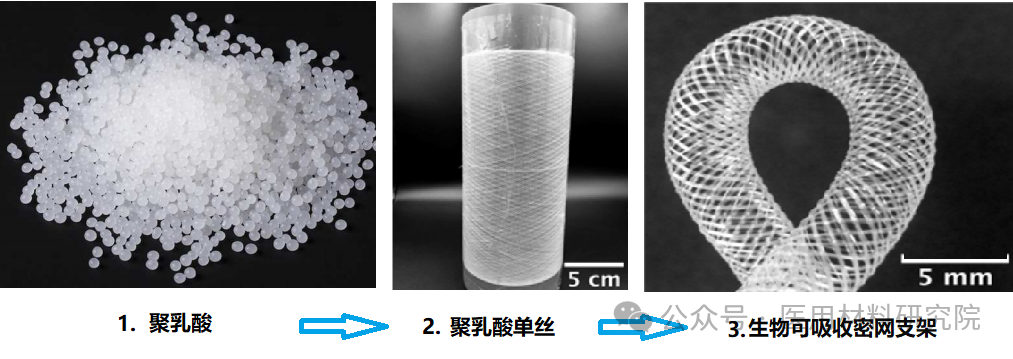
Mesh scaffold: By melting and spinning PLA (medical grade, requiring characteristics such as lubrication and extremely high fluidity), a biodegradable absorbable mesh scaffold can be fabricated. The process is as shown in the following diagram:
Challenges and Prospects: Towards "37 Degrees" of Smart Healthcare
Although the prospects are promising, PLA still faces challenges in medical applications. For instance, how to ensure the degradation rate while maintaining sufficient mechanical strength? And how to obtain stricter regulatory approval for medical devices?
The industry trends in 2026 indicate that AI is deeply integrating with PLA 3D printing. From using AI to assist in designing the optimal lattice structure for lightweighting, to leveraging big data to predict the in-body degradation curves of implants, the technology is making everything more precise.
Just as industry experts have stated, future medical devices will shift from being "cold" to "at body temperature" (37 degrees Celsius). PLA 3D printing technology is the vanguard of this transformation. It is not only a material innovation but also a vivid illustration of the shift in medical models from "standardized treatment" to "personalized care".
Reference: The data and viewpoints presented in this article are comprehensively derived from the latest research findings of the China Composites Industry Association, Stratasys, the National Health Commission, and relevant academic journals.