

The engineering team from the University of Sharjah in the United Arab Emirates recently published an experiment in the journal "Construction and Building Materials" (online release in March 2026): They used 3D printing technology to create sawtooth and corrugated-shaped reinforced plates from PLA bioplastic to replace the steel bars in concrete. In the laboratory, the flexural strength of these "plastic reinforcing bars" reached nearly 80% of that of traditional steel bar samples, with the maximum load capacity doubling and toughness increasing fivefold.
The combination of concrete and steel comes at a high cost. In the high-salt and high-humidity coastal environment of the Middle East, ordinary steel bars are highly prone to corrosion due to chloride ion erosion, resulting in extremely high maintenance costs.
It is precisely these pain points that have led the engineering team at the University of Sharjah to turn their attention to a compostable bioplastic made from renewable resources such as corn starch - polylactic acid (PLA). They have taken advantage of the free-forming ability of 3D printing to design PLA-reinforced plates in complex geometries such as wavy and zigzag shapes, attempting to replace the steel bars in concrete.
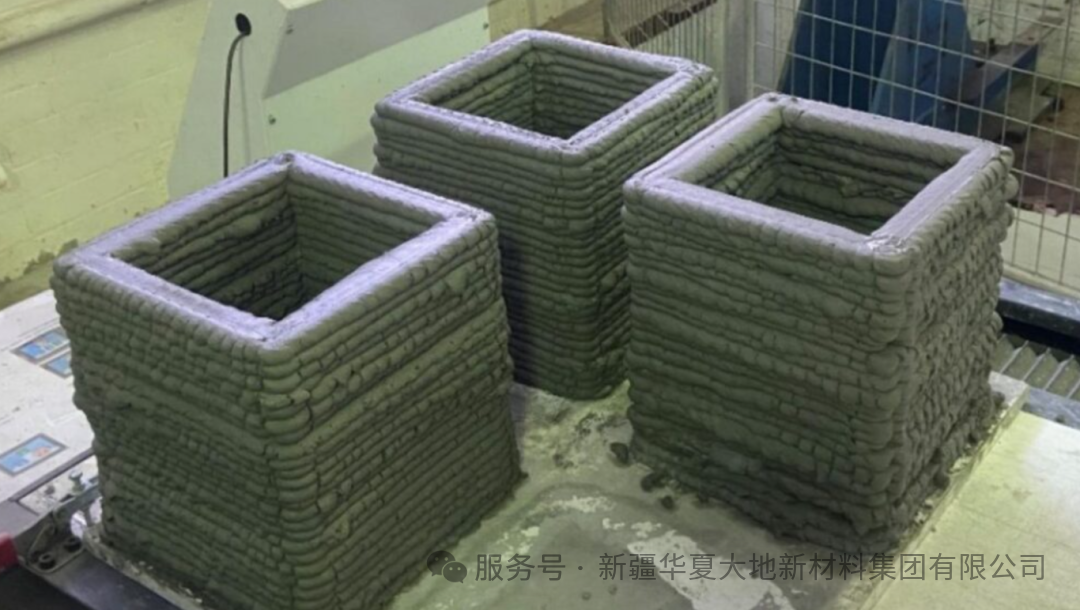 Image source: Global Recycled Plastics Information Station
01Core Breakthrough: The Mechanical Wonder of the Toothed Plate
The traditional steel bars rely on surface deformation to bond with the concrete. The Shajah team took a different approach, leveraging the 3D printing's ability for free-form design to create wave-shaped and toothed-shaped reinforcement plates. They compared the performance of square rods, round rods, and corrugated plates.
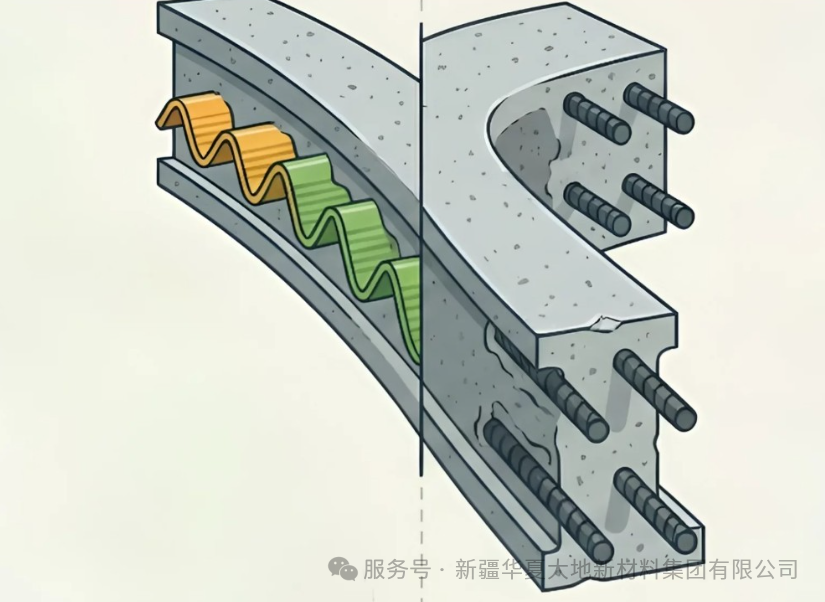 A section of concrete reinforced with traditional steel bars (on the right) and an experimental new wave-shaped PLA (on the left) (Source: University of Sharjah).
The result is quite clear: the geometric structure is more crucial than the material type. The optimized corrugated PLA board has a bending strength of 80% that of steel bars and has comparable ductility. The research team clearly stated: "PLA sheets are significantly superior to PLA rods" because the texture structure is like a wedge that embeds into the concrete, improving the interface bonding performance. The sheets achieve a performance leap by distributing the load over a wider contact surface.
02"Non-Steel" Opportunities in the Middle East
This research happened to coincide with the window of demand for "non-steel" alternative materials in the Middle East's construction market.
Corrosion resistance: PLA is resistant to corrosion. It naturally avoids the problem of chloride ion erosion, making it highly attractive for projects in the Persian Gulf ports and coastal embankments.
Life-cycle economics: An analysis indicates that plastic reinforcements can reduce maintenance costs caused by steel corrosion, and have long-term economic value for infrastructure along the coast of the Middle East.
Supply chain implementation: Emirates Biotech has launched the "Hawk PLA Project", establishing a factory in the KEZAD Economic Zone of Abu Dhabi. It is scheduled to commence production in early 2028, with an annual capacity of 160,000 tons. This will be the first commercial PLA production facility in the Arab world. The UAE University (UAEU) has also signed a cooperation agreement with them to tackle the issue of PLA's high-temperature performance.
03Four thresholds that must be crossed
From laboratory components to building structural standards, the PLA reinforcing materials still need to overcome four hurdles.
1. Mystery of long-term alkaline degradation: The interior of concrete is a highly alkaline environment (pH > 12.5). A special study published in the journal "Materials" in 2025 clearly pointed out that there are still gaps in understanding the mechanical and chemical behaviors of PLA in an alkaline environment. No one knows exactly how much effective strength remains in a PLA reinforcing bar buried in concrete after 10 years.
II. Creep and long-term load deformation: PLA, as a thermoplastic polymer, will undergo creep under continuous load. The creep of steel can be disregarded. The creep data of PLA in the construction field has almost no precedents for reference.
III. Performance Weaknesses under High Temperatures: The surface temperature in the Middle East can reach 60–70℃ during summer. The glass transition temperature (Tg) of PLA is between 55–65℃, and when the mechanical properties of PLA are close to this temperature, they will significantly deteriorate. This is the most critical weakness of PLA in its application in the Middle East.
 Image source: Visual China
IV. Absence of Building Standards: Currently, there are no international building standards that specify the application of PLA reinforcing components in concrete. It took GFRP (glass fiber reinforced polymer) more than twenty years to be included in the ACI 440 guidelines. The time scale for PLA to enter the design specifications should be measured in decades.
04A new puzzle piece, not a substitute
PLA reinforcements may not be able to replace the reinforcing bars used in high-rise buildings or long-span bridges, but they have unique competitiveness in the following scenarios: lightweight enclosure structures (low-rise walls, landscape components), corrosive environments (coastal retaining walls, water treatment plants), temporary or removable structures (Expo venues, modular exhibition halls), and synchronous reinforcement of 3D-printed concrete buildings.
What is more worthy of attention is its potential for emission reduction - if PLA reinforcement materials can replace steel bars in 10% of concrete structures, the equivalent amount would be considerable. For several Middle Eastern countries that are advancing towards the "net zero" building goal, this is not just a matter of material substitution; it is also a contest for the discourse power on the low-carbon track.
In the century-long partnership between steel bars and concrete, it was published online in March 2026 in the top SCI journal of civil engineering, "Construction and Building Materials" - this "zigzag-shaped plastic ruler" might have for the first time given plastic its own voice within the load-bearing system of concrete.
Disclaimer: This article is based on the publicly available academic materials and industry data published by the research team of Sharjah University. It is solely for the discussion of industry technology trends and the interpretation of cutting-edge research. It does not constitute any investment advice or guidance on building material selection. The technical performance data mentioned in the article are based on tests of small-sized specimens under laboratory conditions. The actual application in engineering requires the formulation of relevant standards and long-term performance verification before they can be referred to.