
Walter Lutz is the Secretary General of Textile ETP, the European Technology Platform for Future Textiles and Clothing, an organization composed of companies, associations, and industrial clusters representing research, development, and innovation interests across the entire manufacturing value chain—from fibers to finished textile products. In an interview in April 2025, Walter Lutz shared the urgent need for bio-manufacturing within the textile industry.
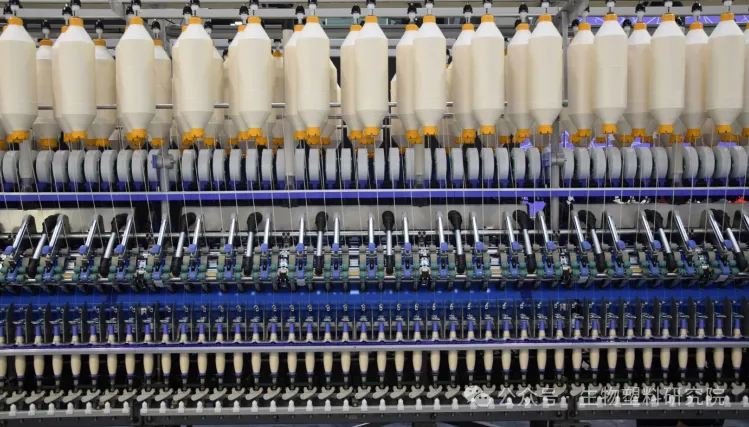
Question: What potential does the textile industry (production) have in biomanufacturing?
Answer: Today, two-thirds of globally produced textiles are synthetic fibers made from fossil-based raw materials, a proportion that has steadily increased over the past 50 to 60 years. As time goes on, we need to work toward replacing fossil-based materials with renewable ones.
Natural fibers and fiber-to-fiber recycling are part of the solution, offering a certain level of sustainability. However, they are unlikely to meet most of the demand for textile materials. Therefore, bio-manufacturing synthetic fibers from sustainable bio-based feedstocks is the best option to bridge this gap.
Can you give us an example?
Answer: The most produced bio-based synthetic fiber is cellulose fiber derived from wood, such as viscose and lyocell fibers, along with several other smaller varieties that together account for approximately 5–6% of global fiber production. The production of viscose fiber relies on harsh chemical processes with high pollution potential. Therefore, cleaner and more resource-efficient processes are needed to enable large-scale production of sustainable synthetic cellulose fibers.
Another example is bio-based synthetic fibers, which are traditional fibers such as polyester and polyamide made from renewable biological raw materials.
Question: Regarding textiles, bio-manufacturing, and regulation: What measures can European regulators take to enhance the potential of textile production in bio-manufacturing?
Answer: The goal of EU regulators is to make the textile industry more sustainable, circular, and less environmentally impactful. Several specific regulations that could positively affect bio-manufacturing are currently being prepared.
As part of the Ecodesign for Sustainable Products Regulation (ESPR), textiles have been identified as a highly prioritized product category. Over the next 2–3 years, the EU will establish specific performance requirements for clothing products. Standards such as lower environmental footprint could benefit certain bio-based textiles.
Another key regulation is the Extended Producer Responsibility (EPR) scheme for clothing and other textile products, which requires brands and retailers to organize and fund proper end-of-life management of post-consumer textile waste. An EPR fee will be charged on each product sold to collectively cover these costs.
A mechanism known as "ecological modulation" can ensure that products with a lower environmental footprint or those easier to recycle qualify for reduced EPR fees, or even full exemption. This can incentivize companies to produce more of such products, including those made from bio-based materials.
From "Environmental Choice" to "Compliance Requirement"
In recent years, the EU's textile sustainability policies have been gradually moving from advocacy to implementation.
In addition to ESPR and EPR, systems such as the Digital Product Passport (DPP) are also being rapidly advanced. In the future, consumers will be able to access information about textile raw materials, production processes, environmental data, and recycling status through product information carriers.
This means that material traceability, transparency, and environmental performance will become new sources of competitiveness. For bio-based materials, their origin from renewable resources and clear carbon reduction pathways are expected to attract greater attention in the future restructuring of value chains.
Globally, an increasing number of brands and supply chain companies are investing more heavily in bio-based materials, biomanufacturing technologies, and circular textile solutions. Bio-based materials are gradually shifting from being a "bonus" for sustainability to becoming one of the key technological pathways to meet future market demands and regulatory requirements.