

From who sells better to who creates better
Fast Reading
■
In November last year, JD.com led the development of polylactic acid fabric. Several months later, T-shirts made from polylactic acid using straw as the main raw material were launched.
■
This T-shirt connects the entire supply chain from fabric development to garment production, reflecting the transformation currently taking place in JD's fashion business.
■
The division barriers in traditional industries are being broken down, and platforms are no longer merely channels for traffic or sales; they are increasingly becoming new drivers of industrial upgrading.
Author | Li Xiao
On the walls and metal racks, fabric samples of all kinds hung everywhere within sight—some lightweight and sheer, others thick and stiff, some soft to the touch, and still others smooth and glossy.
This is the R&D center of Saihui Technology located in Nantong, Jiangsu. With annual sales exceeding 100 million yuan, Saihui Technology primarily engages in fabric research, design, and sales, long serving as an OEM manufacturer for major apparel brands. Developing new fabrics has always been a routine part of their work.
What is truly special is one of the pieces of fabric.
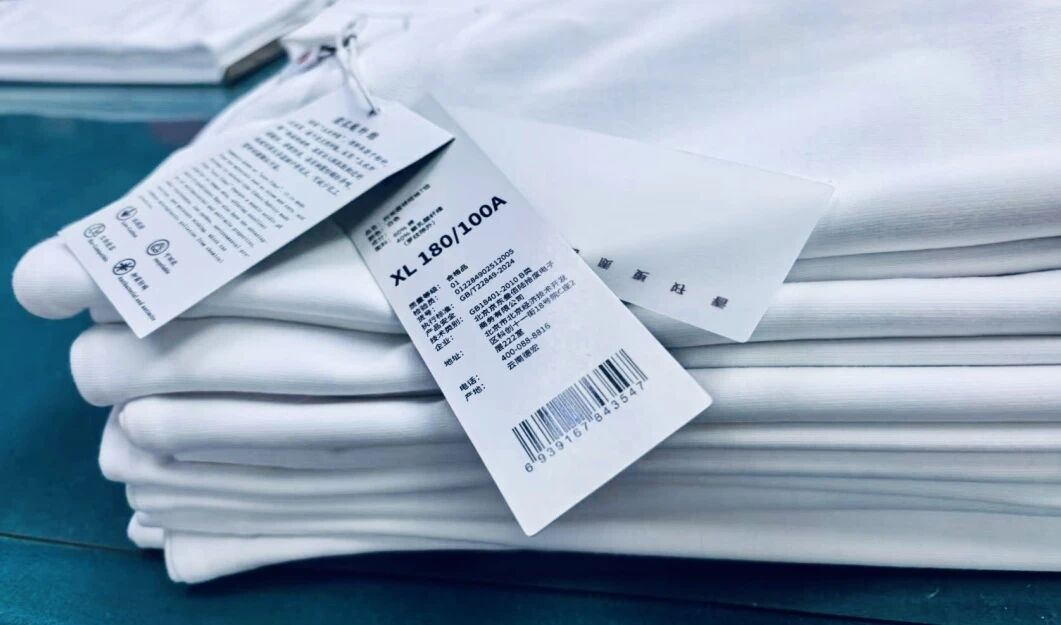
Its raw material is neither cotton nor synthetic fiber, but polylactic acid (PLA), derived from straw. After undergoing a series of complex processes, it is transformed into individual T-shirts.
Even more surprisingly, the initiator of this project was not a traditional clothing brand, but JD Fashion.
At first glance, this appears to be merely a successful product innovation. However, after visiting Nantong, Snow Leopard Finance discovered that behind this T-shirt lies an entire industrial chain—from fabric development to garment production—reflecting the transformation taking place within JD's fashion business: shifting from an online sales channel into a supply chain organizer deeply embedded in the industry, driving supply-side upgrades.
Behind the most commonly worn T-shirt lies not just an experiment with new fabric, but also an industry practice on what truly makes a good piece of clothing.
A T-shirt grown from straw
The PLA fabric development project began in November 2025.
Two months ago, JD Fashion officially launched the JD FASHION label, serving as a quality clothing experience tag under JD Fashion, advocating "defining product value through premium fabrics." To achieve this goal, JD Fashion not only rigorously selects brand products that align with its philosophy but also actively engages in sourcing solutions at the fabric level to address users' pain points.
The PLA research and development project was thus put on the agenda.
In the apparel and textile industry, fabrics are commonly categorized by the source and nature of their raw materials. The most prevalent are petroleum-based textiles, such as polyester, nylon, and spandex; followed by plant-based materials like cotton and linen. Polylactic acid (PLA), derived from renewable plants such as corn, cassava, and straw, is classified as a bio-based material because it requires biotechnology to convert agricultural products into polymer materials during production.
In other words, the first step in developing polylactic acid fabric involves converting corn, straw, and similar materials into polylactic acid fibers through complex biochemical processes. Only then can apparel companies proceed with subsequent garment manufacturing steps such as spinning and weaving. However, this process already falls within the domain of biotechnology, which is beyond the capabilities of conventional textile and apparel enterprises.
A technological chasm lies between two different fields, and JD Fashion just happens to serve as the bridge connecting them.
At the outset of the PLA project, JD Fashion facilitated a collaboration between Saihui Technology and Fengyuan Bio, a unicorn enterprise in the field of bio-based new materials that has mastered the full industrial chain technology for polylactic acid (PLA) and is highly optimistic about the application prospects of PLA in the apparel industry.
For Saihui Technology, this is also an unprecedented collaboration. Established in 2002, Saihui Technology has been deeply involved in fabric research and production for over 20 years, and holds an extremely optimistic outlook on the future of PLA fabrics. "We believe that PLA apparel will become a trillion-dollar market," said Ma Yuwen, Director of International Markets and E-commerce Operations at Saihui Technology.
In her view, human clothing has evolved from plant-based to petroleum-based, "but bio-based is the future."
This assessment is based on three dimensions. On the consumer side, since polylactic acid fabric is naturally weakly acidic and has a pH value similar to human skin, it feels soft and comfortable against the skin, making it gentle for sensitive skin. It also offers excellent moisture-wicking and breathability, along with continuous 24-hour antibacterial properties—effects that have been verified by standardized laboratory tests and third-party testing data.
From an environmental perspective, oil is a non-renewable resource, and petroleum-based fabrics are nearly indestructible under natural conditions. Textile waste can remain buried for 200 years without decomposing, and incineration leads to air pollution. As a result, the textile industry has long been a major contributor to carbon emissions.
The raw material for polylactic acid fabric comes from renewable straw, transforming waste into a valuable resource and reducing emissions from incineration. When discarded clothing is composted, the polylactic acid fully degrades into carbon dioxide and water within 3 to 6 months, achieving carbon reduction or even zero carbon emissions.
Therefore, bio-based materials are not only a key focus of policy guidance but are also gaining increasing attention from the supply side. With technological maturity and cost reductions driven by large-scale applications, the widespread adoption of bio-based textile apparel is an inevitable trend.
However, the application of polylactic acid in the apparel industry currently faces two major bottlenecks: difficulty in dyeing and poor heat resistance. These issues are determined by the molecular structure and thermal properties of polylactic acid itself.
Dyeing is difficult, resulting in poor colorfastness. To achieve deeper and more durable colors, higher temperatures are often required—yet PLA cannot withstand high heat. Typical fabric finishing temperatures range from 150 to 220 degrees Celsius, but PLA must not exceed 140 degrees. These two challenges combined mean that PLA is mostly used for undergarments at a high cost, rarely applied in outerwear, and remains relatively unknown to the general public.
"Since the project officially kicked off with JD.com, the development process has been quite challenging," Ma Yuwen recalled.
JD FASHION's exclusive PLA T-shirt, developed in-house by JD, features custom-designed yarns with tailored specifications and proportions. The fabric employs a double-knit structure, with the cotton blend ratio continuously optimized during development—from an initial 9:1 cotton-to-PLA ratio, adjusted to 8:2, and then further refined to 6:4.
This T-shirt fabric, composed of 60% cotton and 40% polylactic acid, retains the natural benefits of polylactic acid while addressing the common issues of traditional heavyweight T-shirt fabrics—such as heat retention and sweat odor. It ensures a crisp, well-structured silhouette and achieves a breakthrough in dyeing technology. Macaron-inspired colors including clay pink, elephant gray, and mist blue are now available.
Exploration continues. According to Ma Yuwen, a prototype of the T-shirt made entirely of PLA has already been completed, with fabric that is lighter and softer, making it more suitable for summer wear.
The Super Supply Chain Behind a T-Shirt
In fact, beneath the surface topic of PLA fabric development lies a deeper question: how to transform high-quality fabric into affordable products that consumers can actually buy?
After the project launched, over the course of more than half a year, the Saihui team visited JD.com multiple times. Both parties invested significant time and resources into research and development, eventually reaching a consensus: reducing the effort consumers spend on using products and resolving issues is key to winning their favor.
Based on this, both parties agreed to achieve the aforementioned goals through technological innovation along the supply chain and investments across the value chain.
In this process, Saihui Technology leveraged its years of industry expertise in apparel manufacturing to take charge of fabric development and garment production, while JD Fashion served as the supply chain organizer.
Leveraging JD Group's vast consumer data and user insights, JD Fashion identified the core demand for heavyweight cotton T-shirts: maintaining shape and texture while meeting functional needs such as wrinkle resistance, sweat odor prevention, and breathability. Based on this insight, material selection and precise multi-component ratio configuration are critical—any shortcoming would fail to meet user expectations.
JD Fashion has begun seeking solutions from the source materials, leading efforts to organize upstream and downstream enterprises to jointly tackle R&D challenges, launching a deep co-creation model of "platform-driven reverse customization and factory-targeted development."
This model not only eliminates the cost associated with intermediary steps, maximizing benefits for consumers, but also reduces end prices through bulk purchasing, allowing ordinary consumers to avoid paying a premium for new technologies and materials.
Polyactic acid (PLA) chips and pellets used for garment production are relatively expensive due to limited overall industry procurement, with prices approaching three times that of long-staple cotton. However, the PLA T-shirts launched on JD.com during the 618 shopping festival were offered at very affordable prices. "Even at the most competitive price points, we won't compromise on quality. We want more consumers to experience the fresh feel of PLA T-shirts," said Ma Yuwen.
At Saihui Factory, every finished garment undergoes multiple quality inspection processes before leaving the factory. JD Fashion has also established a comprehensive closed-loop quality control system covering sourcing from origin, incoming inspection, warehouse management, and after-sales traceability.
This T-shirt embodies the collective effort of the platform and various stakeholders across the supply chain. It is a vivid illustration of JD Fashion's integration of consumer insight, joint R&D, direct sourcing, quality control, and large-scale sales—redefining quality standards through JD's super supply chain.
Polylactic acid T-shirts are just one example of JD FASHION's self-developed initiatives to create high-quality apparel. Additionally, research achievements such as traceable cotton and smart sweat-hiding technology have been transformed into practical clothing solutions.
Currently, JD FASHION covers most core apparel categories. All labeled products undergo rigorous selection by JD's procurement and sales teams, meeting high quantitative standards in fabric, material, and functionality. For materials with stricter quality requirements—such as cotton-linen blends, acetate, silk, cashmere, and wool—more detailed quality inspection standards have been established. By collaborating with multiple authoritative third-party testing agencies both domestically and internationally, JD Fashion has built a comprehensive quality control system spanning brands, factories, and independent inspection bodies.
JD FASHION is more than just a label—it represents a rigorous quality screening system designed to address trust issues in consumers' clothing shopping. By offering a more reliable purchasing experience, it builds consumer confidence: when buying clothes, simply look for the JD FASHION label and rest assured you won't encounter disappointments.
It's not easy. In the highly competitive apparel industry, building a product reputation and crafting a quality narrative—rather than relying on marketing for buzz—requires first resisting the temptation to get caught up in "style wars" and price competition. It also demands patience and perseverance, being willing to quietly dive into the details, starting from a single piece of fabric or a subtle craftsmanship element.
The Next Frontier in Fashion Industry Competition
The apparel industry is undergoing a new wave of consumer migration.
In the past, consumers focused more on clothing brands and styles, seeking fashion appeal and the added value of identity conveyed by brand symbols.
However, as consumer market information becomes increasingly transparent—especially with the advancement of AI capabilities—professional details about clothing such as fabric composition, manufacturing processes, and functional properties are now easily accessible. As a result, apparel consumption is gradually returning to its core essence. Products that lack quality and are "stylish but uncomfortable" are being phased out.
JD.com's sales data shows that in recent years, consumers have increasingly focused on fabric materials, composition, and functionality, driving higher transaction volumes for eco-friendly fabrics, functional textiles, and comfortable, durable clothing. Professional terms such as "fabric count" and "grams per square meter" are also appearing more frequently in product reviews and on social media.
Changes in consumer focus, though seemingly subtle, are often the earliest signals of industry transformation.
As consumer preferences shift, the importance of fabric comfort, safety, durability, and practical garment features such as sun protection, breathability, wrinkle resistance, and warmth has increased. This reflects a maturation in consumer mindset and is pushing the industry to transition from a focus on marketing to a greater emphasis on product quality. Apparel competition is gradually evolving from a "traffic-first" model to a dual-driven stage centered on "product excellence plus refined traffic management."
A best-selling product's design and promotional copy can be easily copied, but the fabric, craftsmanship, and quality control processes cannot be imitated—these elements become the true moat protecting the product and brand.
During this year's 618 shopping festival, JD FASHION's self-developed fabric products, including polylactic acid (PLA) apparel, experienced explosive growth. Data shows that within the first 52 hours of the 618 event, sales volume for JD FASHION's exclusive self-developed fabric series—products participating in 618 for the first time—increased by 220% compared to the previous period, driving nearly 50 JD FASHION-labeled footwear and apparel categories to achieve double-digit growth over the same period.
A similar phenomenon occurred during the March China International Fashion Week, when sales volume for JD FASHION-labeled apparel doubled compared to the previous month. Likewise, at the end of last year, sales of down jackets and cotton homewear on JD FASHION increased by 288% month-on-month.
A stable and efficient supply chain system, differentiated high-quality products, rigorous selection processes, and strict quality control standards are gradually transforming JD FASHION's reputation for quality into a strong brand identity in consumers' minds.
The development and emergence of polylactic acid T-shirts, along with the evolving role of JD FASHION, also reveal new trends in the upgrading of the textile and apparel industry.
In the past, brands handled research and development, factories managed production, and platforms were responsible for sales. The division of labor in traditional industries created barriers that hindered the flow of demand and information, causing R&D to often disconnect from users' actual needs, leading to blind imitation in product innovation, severe homogenization in manufacturing, and sales relying solely on traffic to capture market share.
But now, the division barriers in traditional industries are being broken down, and platforms are no longer merely channels for traffic or sales; they are gradually becoming new drivers of industrial upgrading.
Leveraging vast consumer data and AI computing power, the platform can accurately capture core consumer needs while integrating upstream and downstream industrial chain resources, proactively breaking down barriers across various stages to become a driving force deeply embedded in the heart of the industry.
▌Conclusion
For a long time, people have tended to view the apparel industry as a business centered on brands, design, and marketing. But today, as consumer behavior becomes more rational and technology continues to advance, an increasing number of factors determining success are shifting upstream along the supply chain.
Fabric innovation, material development, production processes, and supply chain efficiency—capabilities once hidden behind a price tag—are now becoming key factors in consumers' decision-making.
The next competition in the apparel industry may not first unfold on runways, live streams, or billboards, but rather be hidden within a single fiber, a piece of fabric, and embedded in laboratories, factory workshops, and supply chain systems.
The apparel industry is moving away from an era of "who sells better" toward one of "who creates better." In the end, it won't be about who tells the best story, but who can truly weave technology, supply chain, and quality into a single garment.