
Biological manufacturing is emerging as a new engine for global economic growth and is highly valued by the major economies around the world. The "Science and Technology Herald" invited the president of Nanjing Normal University and a Chinese Academy of Engineering fellow, Huang, and his team to write an article. They expounded on the conceptual connotation of biomanufacturing, analyzed and assessed the international competition situation, and summarized the progress of China in terms of scientific and technological achievements, innovation platforms, and industrial development. They also proposed relevant suggestions for the challenges faced by China's biomanufacturing industry.
Biological manufacturing holds great potential and is expected to become a new engine for global economic growth. China regards biological manufacturing as a core representative of new quality productive forces and one of the six future industries, and is fully committed to making it a powerful new engine driving the country's economic high-quality development. The "14th Five-Year Plan" period will be an important opportunity for the accelerated evolution of biotechnology and the rapid development of the biological manufacturing industry, and also a crucial juncture for achieving China's high-level scientific self-reliance and self-strengthening.
1. The connotation of the concept of biomanufacturing
Internationally, the European Union and the United States have developed two distinct representative classification models based on their different industrial policies and technological governance logics. Among them,
The EU regards biomanufacturing as the industrialization realization path for biotechnological innovations. Its core lies in converting biological resources to produce chemicals, materials, and energy, covering the entire industrial chain, including basic fields such as agriculture, forestry, fishery, food processing, and pulp and paper production, and extending to key links in the chemical, biotechnology, and energy industries.
In the United States, biomanufacturing is defined as "the process of manufacturing products on an industrial scale through biological systems (including plants, microorganisms and their molecular components)". The core focus is on "advanced biomanufacturing driven by life science and biotechnological innovations", and the industry scope is narrower than that of the European Union, excluding traditional industries such as tobacco manufacturing, leather products, wood processing, paper products, furniture and clothing.
The definition of biomanufacturing in China mainly presents a two-dimensional perspective:
In the technological paradigm dimension, it is defined as an advanced manufacturing method driven by cutting-edge technologies such as synthetic biology and artificial intelligence. The core shifts from traditional fermentation to new-generation technology systems such as synthetic biology and bio-computing.
From the perspective of the industrial category, it emphasizes its role as the core carrier of green manufacturing, and continuously deepens its application in scenarios such as industrial emission reduction and the substitution of bio-based materials.
2. International Development Trends
2.1 Technological Development Trends in the Biomanufacturing Field
In recent years, the underlying technologies of biomanufacturing have continued to make breakthroughs, driving the industry towards precision, efficiency and large-scale production. The ability to modify chassis cells has significantly improved, gene editing tools have been continuously updated, and DNA synthesis technology has advanced towards high-throughput, greatly enhancing the precision and efficiency of biological function design; the deep coupling of synthetic biology and artificial intelligence technology has accelerated research such as gene function analysis and metabolic pathway optimization.
The green and low-carbonization of processes is receiving increasing attention, driving the biorefinery industry towards a cleaner and more sustainable model. The concept of comprehensive utilization of by-products is shifting from "end-of-pipe treatment" to "value re-creation", and downstream separation and extraction technologies are also evolving towards higher efficiency and greater refinement.
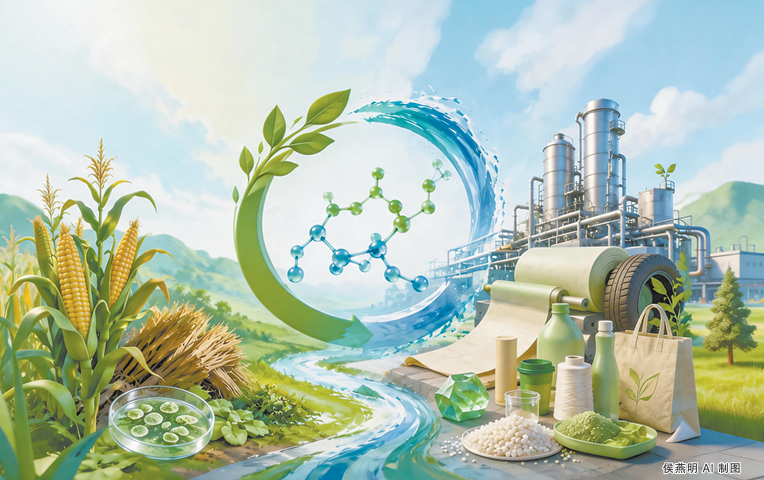
Synthetic biology manufacturing is profoundly transforming the way of material production, gradually achieving technological maturity and market application. It utilizes biological resources to efficiently produce products under mild conditions such as normal temperature, normal pressure, and aqueous phase, which is conducive to promoting the green substitution of chemical raw materials and production processes, accelerating the transformation of the industry from petrochemical-based to bio-based, and has extensive application prospects covering multiple fields such as medicine, agriculture, food, chemical, materials, and energy.
2.2 Key Biomanufacturing Strategies of Major Countries
1) The United States: Emphasizes fully leveraging the potential of advanced biotechnology and biomanufacturing to consolidate its leadership and competitiveness in the global biomanufacturing sector. Since 2022, the United States has intensively released a series of biomanufacturing strategic policies, including Executive Order No. 14081 - "Executive Order on Promoting Innovation in Biotechnology and Biomanufacturing to Achieve a Sustainable, Safe and Reliable American Bioproduction Economy", "Grand Goals of Biotechnology and Biomanufacturing", and "Biomanufacturing Strategy", etc.
2) The European Union: Views biomanufacturing as the core driving force for industrial transformation. Through a systematic policy framework, such as the "New Strategy for Sustainable and Circular Bioeconomy Development" and "Building a Future with Nature: Promoting Biotechnology and Biomanufacturing in the EU", and by holding biomanufacturing policy summits, it continuously promotes the development of this field, striving to enhance economic competitiveness while achieving sustainable environmental development.
3) Other countries: The UK released the "National Vision for Engineering Biology", proposing a strategy of investing 2 billion pounds in the next 10 years to lead the development of the bio-manufacturing industry through engineering biology; Japan initiated the "Special Research and Development Plan for Promoting the Biomanufacturing Revolution", and released a new version of the "Bioeconomy Strategy", listing biomanufacturing and bio-based products as one of the core pillars, and striving to build a microbial and cell design platform integrating biotechnology, artificial intelligence and digital technology.
3 Current Situation and Problems of Biomanufacturing in China
3.1 Current Situation of Biomanufacturing in China
Significant progress has been made in the field of biological manufacturing in China.
In terms of technological progress, the country has successively implemented key national research and development program special projects such as "Synthetic Biology" and "Green Biomanufacturing". Original research achievements have been continuously emerging, and the quality of scientific research, technical level and international influence have achieved synchronous improvement.
In terms of innovation platforms, multiple research centers have been established in key regions such as the Beijing-Tianjin-Hebei region, the Yangtze River Delta region, and the Guangdong-Hong Kong-Macao Greater Bay Area. The research network has continued to expand and the innovation capabilities have been continuously
In terms of industrial development, a significant scale advantage has been achieved. The total volume of biological fermentation products ranks first globally, with the output of major biological fermentation products accounting for approximately 70% of the global total. The industrialization levels in specialized fields such as bio-based plastics, bio-based chemical fibers, and bio-based rubber are among the top in the world. The biological manufacturing of some major chemical products has also achieved industrialization first.
3.2 Challenges and Issues Faced by China's Biomanufacturing Industry
The basic common technological innovation capabilities are facing three major problems.
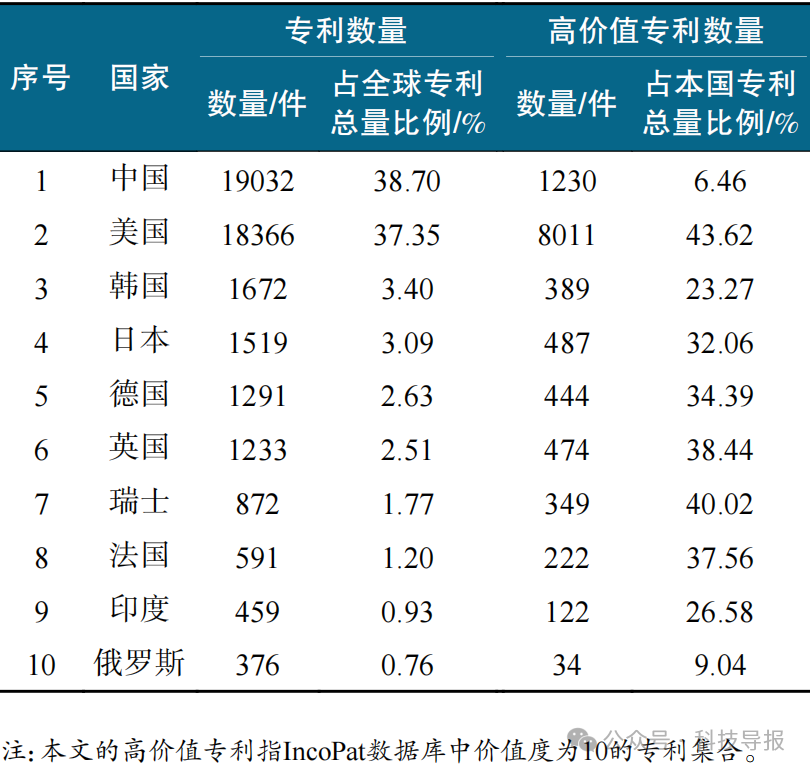
First, the key enabling technologies in synthetic biology still have a gap compared to developed countries in multiple aspects such as design, construction, testing, and learning. Moreover, the number of high-value patents is only about 1/7 of that of the United States (Table 1).
The second point is that industrial bacterial strains are facing severe challenges of "low efficiency, low performance and high risk of intellectual property rights".
Thirdly, a significant portion of high-end enzyme preparations are highly dependent on imports. This field has high technical barriers, requires substantial investment and a long development cycle. Enterprises from the United States, the European Union, etc. hold a dominant position in technology. Currently, over 75% of the core enzyme preparations in China's fermentation industry rely on foreign supply.
Table 1 Patent Application Situation in the Field of Synthetic Biology by Major Countries (2015 - 2024)
2) Insufficient development of sustainable and low-cost raw materials.
Currently, the raw material composition of China's biomanufacturing industry is relatively monotonous. Approximately 90% of the initial raw materials come from cereal crops such as corn. Long-term excessive reliance on staple grains not only leads to conflicts such as "competing with the people for food and competing with livestock for feed", but also hinders the autonomy of raw material control and the sustainable development of the industry. Transitioning to non-grain biomass resources has become an ideal approach, but the potential has not been fully unleashed: Agricultural and forestry waste resources are abundant, but they are mainly used for on-site land reclamation, and high-value utilization off-site is still in its infancy; Industrial by-product carbon sources are abundant and inexpensive, but they are generally disposed of at a low value; One-carbon resources have a wide source and low cost, and are potential raw materials for the next generation of green manufacturing, but their biological conversion technologies are still in the laboratory verification stage. At the same time, the large-scale industrialization of non-grain biomass resources still faces multiple bottlenecks, mainly including low conversion efficiency of raw materials, multiple process inhibitors, and the unripe commercialization conditions of one-carbon biotechnology.
3) The biological manufacturing equipment has obvious shortcomings in terms of autonomy and systematicity.
From basic research to production application, multiple links are subject to external constraints: At the basic research stage, some high-end scientific research instruments are highly dependent on imports, which restricts independent innovation and brings risks to technological security. At the production stage, in specific fields such as raw materials, processing, components, and testing, especially key equipment and materials like bioreactors, biological separation media, and instruments, there is still a gap compared to international advanced levels. At the same time, there are deficiencies in aspects such as separation extraction levels, detection evaluation technologies, and intelligent control processes. Some core instruments rely on imports. Moreover, the entire industry has not yet formed a complete equipment and technology system. During the "14th Five-Year Plan" period, although a number of pilot and demonstration projects were initiated with products as the core, there is still a lack of complete evaluation standards in aspects such as engineering equipment complete systems.
4) The biomanufacturing industry is facing a significant shortage of skilled personnel.
On one hand, there is a lack of high-end interdisciplinary talents, and the existing talent structure and talent cultivation system are unable to meet the industry demands, resulting in a significant structural shortage. On the other hand, the integration of industry and education is not close enough, leading to a disconnection between talent cultivation and demand. There is a structural imbalance between university disciplines and industrial demands. The cultivation of postgraduate students focuses more on upstream strain design and theoretical research, while the practical aspects such as downstream fermentation processes and engineering scaling-up are relatively weak, causing a shortage of talents in fields like fermentation and engineering processes. Moreover, the collaborative mechanism between industry, academia, and research institutions is not well-established, which further restricts the cultivation of interdisciplinary talents and the transformation of research results.
4 Suggestions
4.1 Coordinate the joint research efforts on key core technologies for biological manufacturing
Strengthen top-level design and departmental collaboration, coordinate resource allocation, draw on international experience and combine with national conditions to formulate a national blueprint for the development of biomanufacturing industries, clearly define measurable development goals and implementation paths, and provide systematic guidance for the entire chain development. Focus on major fundamental issues, common fundamental technologies and key core technologies in the field of biomanufacturing, systematically deploy major research projects, including strengthening basic research to drive breakthroughs, implementing basic capacity-building projects, deploying key technology research and development projects, and promoting the engineeringization and application demonstration of major products.
4.2 Establish a new model of "efficient and high-value utilization of non-food biomass resources + synthetic biological manufacturing"
Strengthen the development of sustainable and low-cost raw materials, explore the utilization of low-cost biomass raw materials such as molasses and corn pulp, and enhance the large-scale application of non-food biomass such as lignocellulose; promote green and renewable resources such as green ammonia, reshape the industrial chain layout, and empower remote areas to become biomanufacturing centers; optimize the starch carbon source industrial chain, laying the industrial foundation for the mature application of second and third-generation biomanufacturing technologies. In the short term, focus on breaking through the second-generation biomanufacturing technology using lignocellulose as the raw material. In the future, layout the third-generation biomanufacturing technology using monocarbon compounds (CO2, CH4, CO, etc.) as the raw material.
4.3 Strengthen the system integration and domestic application of biomanufacturing equipment
Accelerate the research and development of key instruments and equipment in the field of bio-manufacturing. Break through key technologies such as high-sensitivity detectors and automated sample processing modules, achieve automation and intelligence throughout the production process, improve system stability and efficiency; establish a joint research and development mechanism involving industry, academia and research institutions; through policy incentives and financial support, promote the large-scale application of domestic equipment among end users, accelerate performance iterations, and enhance the industry's self-control capability.
4.4 Strengthen collaboration to accelerate the industrialization of scientific and technological achievements
Build a biomanufacturing industry ecosystem that connects upstream and downstream, integrate resources, break through barriers between innovation chains and industrial chains, promote collaboration between upstream and downstream through cluster development, and achieve overall upgrading of the industrial chain. In the research from basic to applied stages, create a concept verification platform to drive the realization of the "0 to 1" breakthrough of scientific research results from concept to verification. In the pilot production to industrialization stages, build a number of intelligent and customized one-stop pilot production bases for biomanufacturing, and promote the realization of the "1 to 100" pilot production transformation of scientific research results.
4.5 Build a diversified talent pipeline for biomanufacturing technology
Strengthen the cultivation and introduction of interdisciplinary talents in the field of bio-manufacturing, including establishing a high-level talent pool and implementing international talent introduction plans. Explore a new model of collaborative education between industry, academia and research in the field of bio-manufacturing, focusing on cultivating application-oriented and engineering-specialized talents. Support universities and research institutions to deepen the joint training mechanism with enterprises through platforms such as "industry-academia consortia", "industry colleges" and "excellence engineer colleges".
Author of this article: Yang Yanping, Li Zhao, Li Changrou, Zhang Hongxiang, Chen Guoqiang, Huang He
Author profile: Yang Yanping, Researcher at the Documentation and Information Center of the Chinese Academy of Sciences and the School of Information Resources Management of the University of Chinese Academy of Sciences; Huang He (Corresponding author), Professor at the College of Food and Pharmaceutical Engineering of Nanjing Normal University and the Jiangsu Provincial Research Center for Synthetic Biology, Member of the Chinese Academy of Engineering, Research direction: Strategic intelligence in agriculture and biotechnology;
Source: Yang Yanping, Li Zhao, Li Changrou, et al. Current Status, Problems and Countermeasures of Biomanufacturing in China [J]. Science and Technology Review, 2026, 44(5): 24-31.