

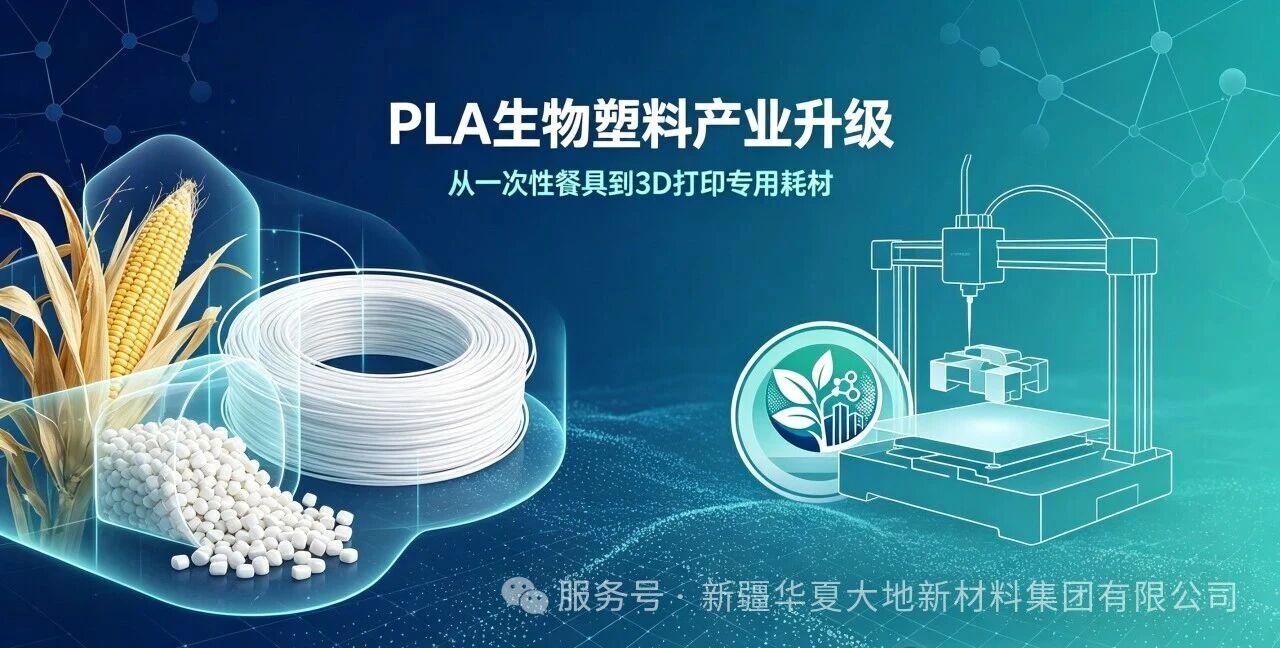
In the past, polylactic acid (PLA) was widely associated with disposable products such as straws, food containers, and agricultural mulch films, leading the industry into a low-price competition trap with profit margins of only 5%–10%. However, between 2025 and 2026, the industrial landscape underwent a complete transformation, as PLA successfully entered the high-value-added field of 3D printing, achieving a structural leap from low-margin packaging materials to high-tech, premium-priced specialty consumables. Based on full-year 2025 industry financial reports, statistics from the Synthetic Resin Association, and publicly available research data from leading companies, this analysis provides comprehensive revisions and updates to data, industry logic, corporate realities, and technical challenges.
1. Overall demand: In 2025, China's total apparent consumption of PLA reached 620,000 tons, a year-on-year increase of 28%. Demand growth varied across downstream segments, with the 3D printing segment growing at a rate of 48.2%. 3D printing materials accounted for 35% of domestic PLA end-use demand, officially replacing traditional packaging as the primary growth driver for PLA.
2. Leading company growth: In 2025, Hai Zheng Bio-Materials' 3D printing business saw a year-on-year sales increase of 88.6%, with the 3D printing segment accounting for 31% of the company's total PLA sales, making it the only high-growth revenue driver in 2025. Hai Zheng's overall revenue reached 852 million yuan in 2025, while net profit declined by 72.21%, as price competition in its traditional packaging business weighed on profitability. The 3D printing division thus became the key lever for performance stabilization.
3. Equipment-side evidence: In 2025, China's total production of 3D printing equipment reached 5.211 million units, a year-on-year increase of 52.5%, ranking first among industrial equipment in terms of growth rate; domestic brands such as Tzuke and Creality have achieved mass exports, driving concurrent expansion in supporting PLA filament supply.
4. Market size by segment: The domestic market for 3D printing-specific PLA resin is projected to reach 862 million yuan in 2025, with Hai Zheng Sheng Cai capturing 28.4% and Anhui Fengyuan accounting for 23.1%, together holding over 50% of the upstream specialty material market share as a duopoly.
Why do FDM printers "have to use PLA"?
In the desktop Fused Deposition Modeling (FDM) 3D printing market, PLA consistently holds over 70% of the global market share, driven by a combination of its superior material properties and favorable global policy support.
Low barrier and user-friendly: Processing temperature range of 170°C–230°C, low shrinkage and minimal warping risk, no need for a heated bed—ideal for affordable home and educational devices priced under 1,000 yuan. With the widespread adoption of high-speed printers (≥200 mm/s) in 2026, modified specialty PLA has become standard for high-speed models, while conventional packaging-grade PLA can no longer meet high-speed printing demands.
Non-toxic and safe: Minimal volatile emissions during melting, making it safer than ABS for home and K–12 classroom use. Government policies from seven departments explicitly promote 3D printing equipment in schools, creating stable procurement channels for consumables within campuses. Leading manufacturers such as Tzuke have launched food-contact-grade pure PLA materials, further strengthening safety advantages for household applications.
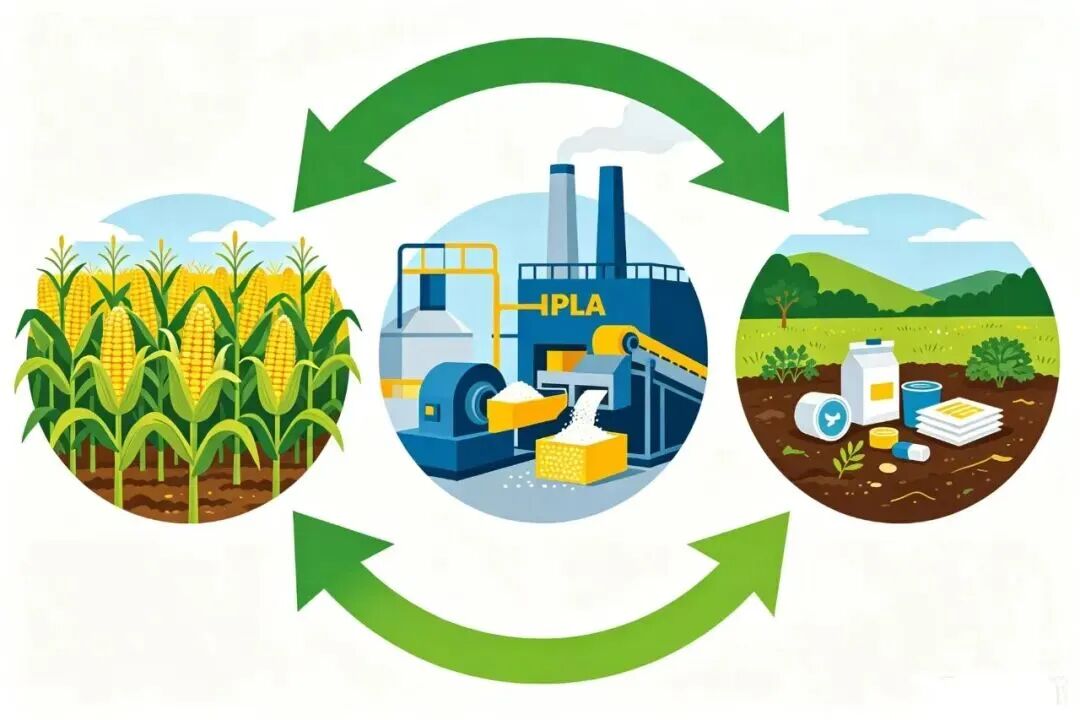
Green and compliant advantages: Raw materials sourced from renewable biomass like corn and straw, resulting in a carbon footprint significantly lower than oil-based ABS. European and American markets mandate EN 13432 biodegradability certification and FDA food contact standards, restricting overseas access to only bio-based materials like PLA—creating a competitive moat for exports.
"Two Ends Outside" Industrial Island
Although China controls over 90% of the global capacity for entry-level 3D printers and more than 60% of PLA filament production, 70% to 80% of this filament is exported. This pattern—raw materials in China, equipment in Shenzhen, and markets overseas—is essentially driven by environmental regulations in Europe and the U.S. (such as EN 13432 and FDA). With extremely low consumer penetration domestically and a lack of a closed-loop model involving "machine sales leading to consumable repurchases," PLA 3D printing has become a unique niche in China: highly active within the industry but largely invisible to the general public.
Layered Competition in the Supply Chain: Securing Molecular Design at the Upstream, Battling ±0.02mm Precision Tolerances at Midstream
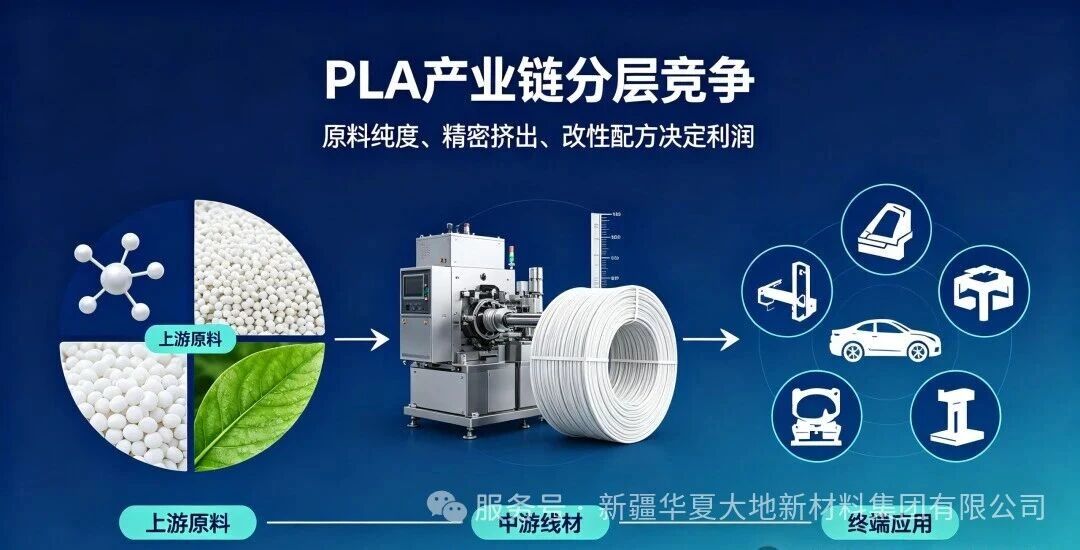
The story of PLA in 3D printing is no longer just about selling generic materials—it has entered the deep waters of specialized and modified resins. Profit distribution along this industrial chain strictly follows the principle that "technological barriers determine pricing power."
Upstream raw materials: Lactide purity and precise molecular weight control
Standard packaging-grade PLA has a broad molecular weight distribution and high residual monomer content, leading to nozzle clogging and interlayer delamination during high-speed printing, making it unsuitable for 3D printing. The core competitive edge of premium filaments lies in the continuous synthesis of high-purity lactide.
In 2025, China's total lactide production reached 284,000 tons, with Anhui Fengyuan producing 96,000 tons—accounting for 33.8% of national output—and becoming the largest self-sufficient lactide producer in the country. The industry-wide lactide yield has increased to 62.3%, while domestic optically pure lactic acid with ≥99.5% purity achieves a self-sufficiency rate of 94.1%, gradually breaking overseas dominance in raw materials.
Enterprise Location 2026 Latest Core Technologies and Business Advantages
Anhui Fengyuan Bio Anhui, Bengbu FY602/FY802/FY801—three specialized PLA grades for 3D printing with precise, narrow molecular weight distribution, suitable for high-speed printing above 200 mm/s; FY802 focuses on high-transparency, high-gloss exterior parts. Owns a full industrial chain of lactide production, offering significant cost advantages and capturing 23.1% of the domestic 3D printing material market share.
Zhejiang Haisco Biomaterials (688203) Zhejiang, Taizhou Annual pure PLA production capacity of 60,000 tons; 3D printing sales increased by 88.6% year-on-year in 2025, accounting for 31% of total sales; advanced low-residual monomer control technology ensures odor-free printing; closely partnered with leading domestic 3D equipment manufacturers, driving continuous growth in domestic business.
Pulisi Wuhu, Anhui Leveraging the technology of the Changchun Institute of Applied Chemistry, Chinese Academy of Sciences, we have established a full industrial chain from lactic acid to lactide and polylactic acid. Our polylactic acid resin features high crystallization rate and excellent melt stability. We have specifically developed materials such as PT102 for 3D printing, effectively solving issues like stringing, nozzle clogging, and yellowing, making them ideal for FDM processes and high-speed printing applications.
Henan Jindan Henan Zhoukou A leading domestic producer of lactic acid is currently constructing a 75,000-ton-per-year project for poly(lactic acid) (PLA) biodegradable new materials (expected to commence production in June 2026), completing the "corn - lactic acid - caprolactone - PLA" closed loop. 3D printing is one of the key downstream fields for its PLA products, and it supports the development of high-end PLA consumables from the raw material end (high-purity lactic acid, caprolactone).
NatureWorks LLC USA / THAILAND The Ingeo™ 3D700 series regulates microstructure to reduce shrinkage, focusing on large-scale particle FGF printing; the closed-loop lactic acid purification process is mature, and domestic high-end modification factories mainly import raw materials from abroad.
TotalEnergies Corbion Holland / Thailand Luminy® D070/D105/D120/D130 high-temperature resistant PDLA pure resin, high-end modified base raw material; In April 2026, due to the increase in energy and logistics costs, the global PLA prices rose
Upstream moat
1. Integrated production capacity is king: JinDan and FengYuan have completed the entire "lactic acid → caprolactone → PLA" production chain, enabling them to independently control raw material costs and thus have the confidence to engage in price wars; the raw material costs of enterprises that purchase caprolactone externally are 12% to 18% higher.
2. Crystallization modification coating technology: By adding talcum powder and cellulose nanofiber nucleating agents, it addresses the issues of slow cooling and warping defects in pure PLA, and is a standard formula for high-speed printing special materials.
3. Cost situation in 2026: The average price of PLA chips produced by Huadong General PLA is 17,200 yuan per ton. The increase in prices of corn and energy has driven up the cost of raw materials. The premium for special modified materials is 20% to 40% higher than that of general materials.
Middle section wire end: ±0.02mm tolerance war
Wire processing is not simply wire drawing; the core involves precise extrusion, moisture content control, and stable formula blending. If the wire diameter fluctuates by more than 0.05mm, frequent wire jamming occurs. Laser online diameter measurement, constant tension winding, and vacuum drying are the hard production thresholds.
Key industry indicators: PLA is highly prone to moisture absorption. The wire moisture content must be controlled at <0.025%. The cost of moisture absorption and return due to shipping in North America far exceeds the value of the goods, and the drying line is the basic threshold for overseas shipping.
Enterprise Location 2026 Positioning, Production Capacity and Technology Roadmap
Guangdong Sanlu Technology Zhongshan / Wuhu Dual overseas production layout in Vietnam and Germany, monthly PLA wire production exceeds 1,500 tons; TikTok sales in the US region reached 4.43 million yuan in a single month; strict control of moisture content through vacuum crystallization drying; focusing on the overseas market with competitive pricing and large-scale production
Shenzhen Guanghua Weiye eSUN Shenzhen A leading industry veteran, PLA + blend TPU/PBAT enhances toughness and impact strength by over 70%; leads in formulating domestic international standards for 3D printing materials, with global channels fully covered.
Suzhou Polymaker Changshu High-end modified premium route, matte, conductive, carbon fiber, high-temperature resistant special fibers; nucleation modification raises HDT to 65-95°C, special grades up to nearly 130°C,对标ing automotive and medical industrial prototypes, avoiding low-price competition
Hangzhou Zhuopu CC3D Lin'an National-level high-tech enterprise, with the largest export volume in China, a main supplier of entry-level consumables for overseas markets, a representative of volume-oriented enterprises
Wuxi Eliz 3D Jiangyin Affiliated to the specialized and innovative "Little Giant" Longshan Synthesis, an integrated solution of wire materials + printing technology, focusing on stable consistency B-end orders
(Some of the consumable material enterprises)
Midstream Profit Model
Volume-oriented (Three Green Basic Model, Zuo Pu): Focus on the low-price consumption market in the overseas Amazon and TikTok markets, relying on low-cost production capacity in Vietnam and Anhui, with a gross profit margin of 15%-20%; Small and medium-sized enterprises simply purchase sheet extrusion and wire drawing, with an average operating rate of only 63.5%, and high inventory turnover pressure, with a gross profit of less than 12%.
Premium-oriented (Polymaker, eSUN PLA+): Targeted at industrial fixtures, medical models, and automotive prototypes, holding REACH, FDA, and ISO13485 medical certifications, the gross profit margin of special wire materials remains stable at over 30%; Leading modified wire material companies such as Jinfabao Technology have a high-end wire material gross profit margin of up to 32%.
Core Hidden Threshold: Full-chain moisture content control. The problem of moisture absorption and spoilage during long-distance overseas shipping is the main loss point for small and medium-sized wire material factories; Enterprises with integrated drying and vacuum packaging production lines have significantly improved the failure rate when going global.
The pain point remains: The " Achilles heel" of the PLA
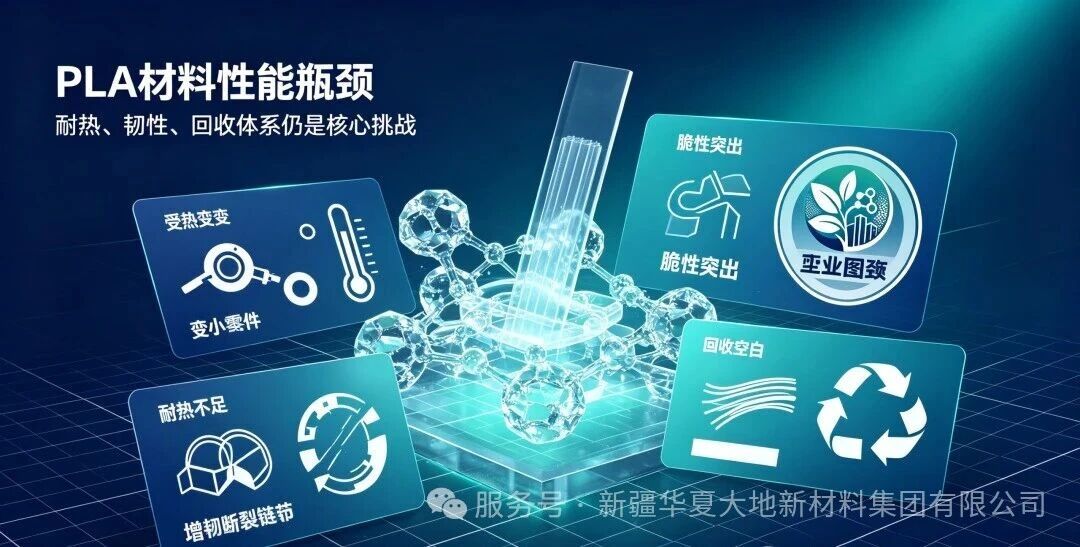
Despite the surge in demand, there are inherent limitations in the physical properties of PLA materials, which are also the core focus of the industry's technological breakthroughs in the next stage:
Low heat resistance of ceiling: The standard pure PLA has a heat distortion temperature of less than 60℃. In summer, the interior of the vehicle and the areas around heat sources are prone to softening and deformation, which limits the application of functional industrial parts; The mature modification solution in 2026: PDLA stereocomposite, PLA-PHA blending, inorganic filler modification, can increase the HDT to 95-115℃. Some special grades can reach 115℃ heat resistance without annealing, but the formula cost will increase by 25%-50%.
Weak toughness and prominent brittleness: Pure PLA is prone to cracking upon impact; The mainstream industry solution is PLA+, PBAT/TPU blending, carbon fiber / wood powder filling; However, the addition of toughness modification will sacrifice printing accuracy and transparency, and there is a contradiction in performance trade-off.
Blank recycling system: The closed-loop recycling industry for 3D printing waste filaments and scraps is almost non-existent; The coverage of domestic industrial composting facilities is low, only laboratories can achieve home composting degradation, and bulk waste materials are still difficult to be greenly processed, and the implementation of circular economy is slow.
Industry final judgment: PLA Race Track Endurance Competition in 2026
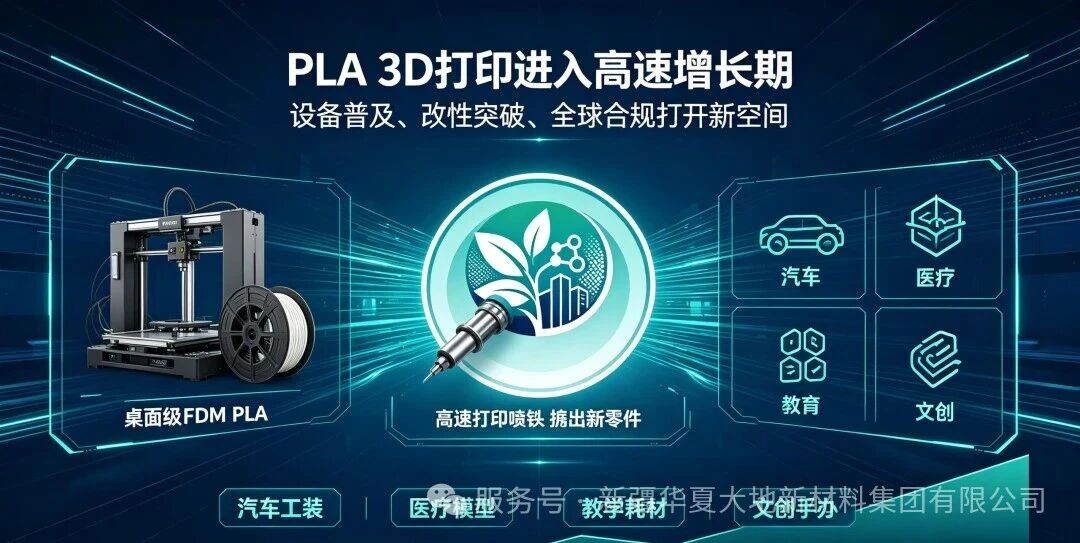
The disposable tableware market is experiencing a complete round of competition, with the overall industry gross profit compressed to 5%-10%. There is an overcapacity issue and a continuous price war. However, the 3D printing consumables market has three advantages: high premium, high repeat purchase stickiness, and global export demand. It has become the core export sector for the PLA industry transformation.
In 2026, high-speed printing equipment will be widely adopted, and heat-resistant modification technology will continue to be implemented. The application scope of PLA will expand from creative hand models to industrial scenarios such as automotive workpieces, electronic accessories, and medical teaching models. In the next three years, the key factors determining the success or failure of the industry will be concentrated in three dimensions:
Material modification capability: Can low-cost achieve a balance between heat resistance and toughness? The production and commercialization speed of blended systems such as PLA-PHA, PLA-PC alloys;
Activation of the domestic C-end market: Currently, the penetration rate of 3D printing in domestic households is less than 10%. The popularization of equipment and the education of consumable scenarios will open up the local incremental market;
Global compliance certification: EU carbon footprint traceability, EN13432, FDA food/medical certification are essential for overseas expansion. Companies that complete the qualification layout in advance will seize the benefits of overseas channels.
The battlefield for PLA is undergoing a transformation. When disposable tableware is caught in the "plastic ban and restriction" tug-of-war and the price war (with the profit margin squeezed down to 5% - 10%), 3D printing offers it a high-profit, high-viscosity, and globalized export. From 2026 onwards, as high-speed printing becomes standard and modification technologies break through the heat resistance bottleneck, PLA will shift from being "specific for figure models and cultural creativity" to "an alternative for industrial accessories".
The decisive factor in the future battle does not lie in "who can produce more PLA", but rather in:
Who can achieve industrial-grade reliability in terms of heat resistance/tenacity modification? (Such as PLA-PHA blends, PLA-PC alloys)
Who can awaken domestic C-end home printing from its "slumber"?
Who will be the first to secure a ticket in the EU certification + carbon footprint traceability program?