
The role of modern agricultural mulching technology in ensuring food security is self-evident. However, traditional plastic mulching films, mainly composed of polyethylene (PE), have stable molecular chains and are extremely difficult to be degraded by microorganisms under natural conditions. Year after year of use has led to an increasing accumulation of residual film fragments in the soil, not only blocking the migration of water and nutrients, but also gradually breaking down into microplastic particles, posing deep ecological risks. To solve this "white pollution" problem, from the perspective of materials science, the solution is clear: design a polymer material that can meet agricultural requirements during its service period and can be assimilated by the environment after its service ends. However, to turn this idea into a producible and scalable product that can be widely promoted, a series of complex engineering problems need to be overcome.
The requirements imposed on polymer materials by the field service scenarios
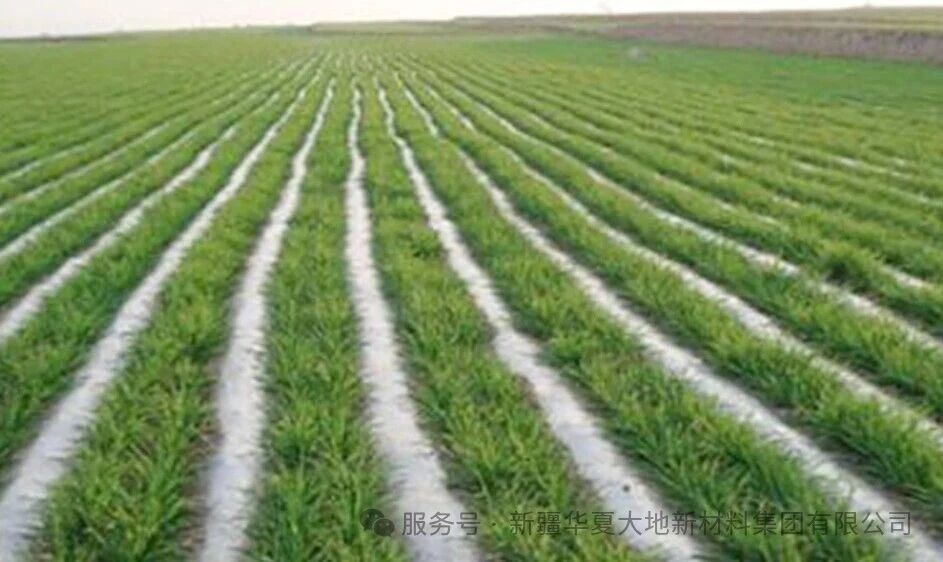
The actual service environment of plastic film in the field is far from being comparable to the stable conditions in the laboratory. During the covering stage, mechanical traction requires the film to have sufficient tensile strength and elongation at break, without causing cracks or perforations due to pulling; throughout the entire covering period, the plastic film needs to withstand continuous ultraviolet radiation, changes in temperature during day and night, erosion by wind and rain, and continuous attacks by soil microorganisms. During this process, its physical barrier function - warming and moisture retention - must not deteriorate too rapidly. More importantly, the complete service period of the plastic film must be precisely coupled with the growth and development period of the crops. For example, for corn, potatoes, and cotton, the covering period varies from 60 days to 180 days. If the plastic film fails prematurely, the warming and moisture retention effects will be lost, directly leading to reduced yields; if degradation is delayed, the residual film remains in the soil, thus defeating the original intention of using degradable plastic films.
From this, it is easy to summarize the four constraints on the material system: first, an initial mechanical strength and toughness that are sufficiently high; second, sufficient tolerance to cycles under natural light and humid heat conditions; third, the ability to be rapidly decomposed by microorganisms after the service period; fourth, the cost needs to be controlled within the acceptable range for agriculture. It can be seen that a single type of polymer is difficult to meet all these requirements simultaneously.
Why choose a multi-component blending system: Starting from the performance complementarity of PLA and PBAT
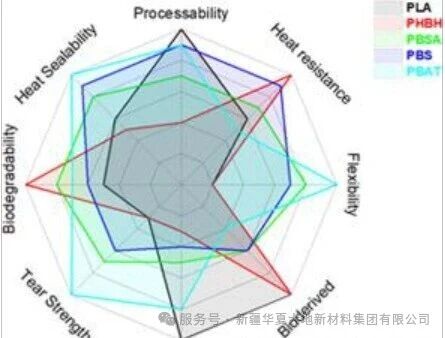
If only the degradability performance is considered, polylactic acid (PLA) is a very attractive option. It is derived from biobased raw materials and has ester bonds in its main chain. After degradation, it generates CO₂ and water. However, pure PLA is brittle and hard, with a fracture elongation rate typically less than 10%, far below the flexible standard required for ground film laying operations. Polybutylene adipate/terephthalate (PBAT) is the opposite - as a linear copolyester of aliphatic and aromatic groups, its molecular chain is more flexible, showing excellent extensibility and flexibility, and its mechanical behavior is closer to low-density polyethylene. However, the tensile strength of pure PBAT is low, and the cost of the raw materials is significantly higher than that of traditional PE. Using it alone is not economically viable.
One established methodology in materials science is "performance complementarity" - by melting and blending two or more polymers together, the aim is to obtain comprehensive properties that a single component does not possess. Currently, the mainstream formulation system in the field of plastic film is the binary blend of PBAT/PLA, and a third component such as polycarbonate succinate (PPC) can be further introduced. In this system, PLA serves as the hard segment to provide strength and modulus, PBAT acts as the soft segment to impart toughness, and PPC combines the functions of toughening and gas barrier. Each component performs its own role, forming a composite matrix with adjustable mechanical properties and a wide processing window.
Post-mixing still requires modification: a dual challenge of compatibility and cost
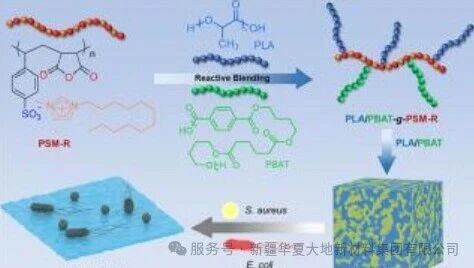
Although PBAT and PLA are both polyesters, their thermodynamic compatibility is not ideal. When directly mixed, phase separation often occurs, and the size of the dispersed phase is relatively large, resulting in a much lower improvement in mechanical properties than expected. Moreover, even if the performance ceiling is optimized through blending, the cost issue remains prominent - compared to the tens of yuan per mu for PE plastic film, the production cost of PBAT-based degradable films has remained consistently high, posing one of the biggest obstacles in the promotion process.
Another variable that must be addressed is the controllability of the degradation period. Current research indicates that the mechanical performance of PBAT film degradable mulch is most significantly affected in the first four weeks, with its tensile strength dropping by nearly 60%. This means that if not regulated, the film may prematurely break down during the critical water and nutrient-demanding period of crop growth. An ideal degradable film should possess the characteristics of "long induction period and fast degradation period" - maintaining structural integrity during the covering period and accelerating decomposition during the later growth stage of crops and after being turned into the soil. To achieve this precise control of the time window, merely relying on the chemical structure of the matrix resin is not sufficient; additional modification methods must be introduced.
Straw and Starch: The Modified Solution from the Fields
Modification of biomass based on agricultural by-products such as straw
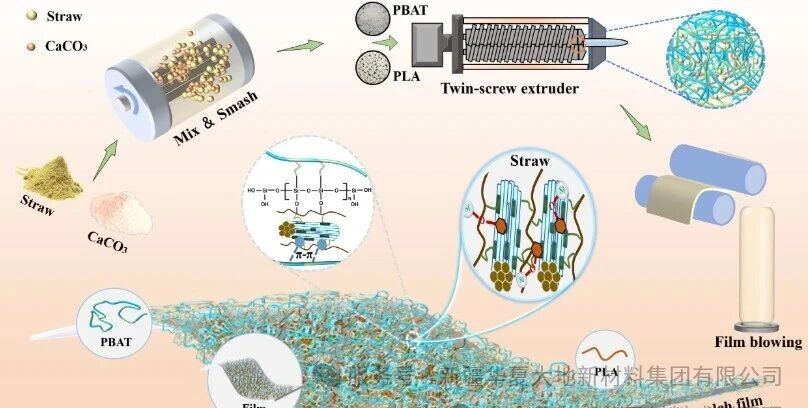
The chemical composition of straw mainly consists of cellulose, hemicellulose and lignin, and it is a vast and low-cost natural polymer resource. The principle of its modification lies in uniformly dispersing the straw powder into the PBAT/PLA matrix through specific interface additive technology and particle size control, enabling it to simultaneously play the roles of reinforcing filler and nucleating agent. Furthermore, the lignin extracted from straw can be converted into plant-based plasticizers, partially replacing traditional chemical products. The value of this strategy is twofold: it significantly reduces the cost of raw materials - studies have reported a reduction of up to 40% - and by introducing natural components, it provides more vulnerable sites for microbial degradation. By adjusting the addition ratio of straw powder, the degradation cycle of the mulch film can also be controlled within a certain range to meet the different crop requirements of 40 to 180 days.
Collaborative modification of starch with nanoparticles
Thermoplastic starch (TPS) is another type of low-cost natural filler that has been widely studied. Introducing TPS into the PBAT/PLA system not only reduces the raw material cost but also utilizes its hydrophilicity to accelerate the hydrolysis process and regulate the degradation rate. However, simply adding TPS will intensify the tendency of phase separation in the system and damage the mechanical continuity. Therefore, researchers further introduced layered silicates (such as bentonite) or silica nanoparticles. These nanofillers can promote the refinement of the PLA dispersed phase during the processing through shear action, improve the interface bonding, and at the same time, by virtue of their barrier effect and UV shielding function, enhance the weather resistance of the film. The concept of synergistic modification is as follows: natural macromolecules solve the problems of cost and degradation regulation, while nanoparticles solve the issues of compatibility and service stability, and the two form a functional combination.
The response provided by the field data
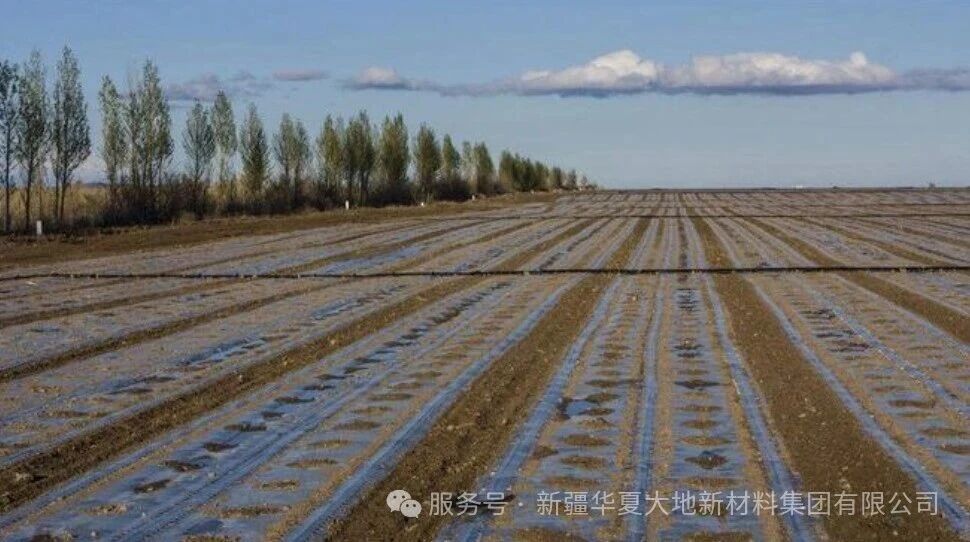
The evaluation data from the laboratory will eventually be subject to field tests. In recent years, multiple field trials have provided positive feedback. The straw-based fully biodegradable plastic film developed by the team from Huazhong Agricultural University has been tested on a hundred-acre scale for crops such as rice, corn, tobacco, and cotton in multiple regions including Hubei, Yunnan, Sichuan, Xinjiang, and Jiangsu. The results show that the film's laying operation performance is the same as that of PE film, maintaining complete coverage during the critical growth period of the crops, and degrading in time after harvest. Compared with traditional PE film, there is no significant difference in yield in the experimental fields, and in some plots, there is even a slight increase.
In the northern foothills of the Yinshan Mountains in Inner Mongolia - a typical dry farming area characterized by high altitude, aridity and strong wind and sand - researchers conducted a potato cultivation experiment using PBAT/PLA fully biodegradable film. The results showed that during the emergence period and the seedling stage, the temperature and moisture content of the soil under the biodegradable film were at the same level as those under the conventional PE film, fully meeting the needs of potato growth in the early stage. By the harvest time, the film had entered the stage of natural fragmentation. In terms of yield, there was no significant difference between the biodegradable film treatment and the traditional PE film treatment. Some of the treatments even achieved a slight increase in yield. The subsequent landfill tracking experiment indicated that after 365 days, the biodegradable film almost completely decomposed.
Conclusion
The fully biodegradable agricultural film is not a "perfect solution". The current challenges it still needs to address include: the actual mineralization rate and complete degradation of the residual film after being tilled into the soil still need to be tracked over a longer time scale; the regulatory mechanisms of different climate zones and soil types on the degradation behavior are not yet fully clear; although the product cost has significantly decreased, there is still a gap compared to traditional PE agricultural films, and it requires the collaborative promotion from the policy end and the market end. However, from the evolutionary trajectory of materials science, from a single non-degradable polymer to a composite system combining multiple blends and natural polymer modifications, a logical and clear technical path has been formed. As more and more field data confirm the design expectations of the laboratory, it is reasonable to believe that the distance between this biodegradable "outer garment" and the vast farmland is gradually shortening.
References
Qu Ping, Guo Baohua, Wang Haibo, et al. Degradation Characteristics of PBAT Fully Biodegradable Mulch Film in Corn Fields [J]. Transactions of the Chinese Society of Agricultural Engineering, 2017, 33(17): 194-199.
[2] Chen Chen, Wang Yang, Wang Xiangjun, et al. Preparation Technology and Research Application Progress of PLA/PBAT Biodegradable Mulching Film [J]. Plastics Technology, 2024, 52(04): 137-142.
[3] Deng Jinhua, Wang Jie, Hu Yuan, et al. Research on the Application Effects of Different Material Mulching Films in Overwintering Tomato Production [J]. Modern Agriculture Science & Technology, 2023, (09): 68-71 + 74.
[4] Ge Mengjie, Wang Lihua, Jiang Shan, et al. Experimental Study on Different Types of Fully Biodegradable Membrane Encapsulation [J]. China Agricultural Technology Extension, 2023, 39(06): 82-84 + 94.
[5] Jin Anni, Qi Yaorong, Yu Fenxia, et al. Research Progress on Degradation Mechanism of Fully Biodegradable Plastic Films [J]. Anhui Agricultural Sciences, 2024, 52(18): 19-24.
[6] Luo Jun, Hu Jiancan, Wang Bo. Research on the artificial aging test method of fully biodegradable plastic films [J]. Plastics Industry, 2022, 50(12): 99-102.
[7] Zhang Peng. Research Progress and Application Status of Fully Biodegradable Plastic Films [J]. Agricultural Development and Equipment, 2024, (11): 151-153.
[8] Wei Chang, Lu Mingfu, Guo Peng, et al. Research Progress on Preparation and Application of Biodegradable Plastic Films [J]. Plastics Technology, 2023, 51(06): 112-117.
[9] Ai Fuke, Yong Chen, Zhang Yang, et al. Review on the Current Development Status of Biodegradable Agricultural Mulching Films and Their Environmental Impact and Economic Benefits [J]. Jiangsu Agricultural Sciences, 2023, 51(01): 8-15.
[10] Miao Yingju, Xiang Siyu, Wei Yingfen, et al. Research Status of Natural Polymer-Based Biodegradable Agricultural Mulching Films [J]. China Plastics, 2023, 37(06): 99-106.