


Trace Additives Enable Rapid Degradation of Bioplastics While Preserving Optical Transparency and Mechanical Strength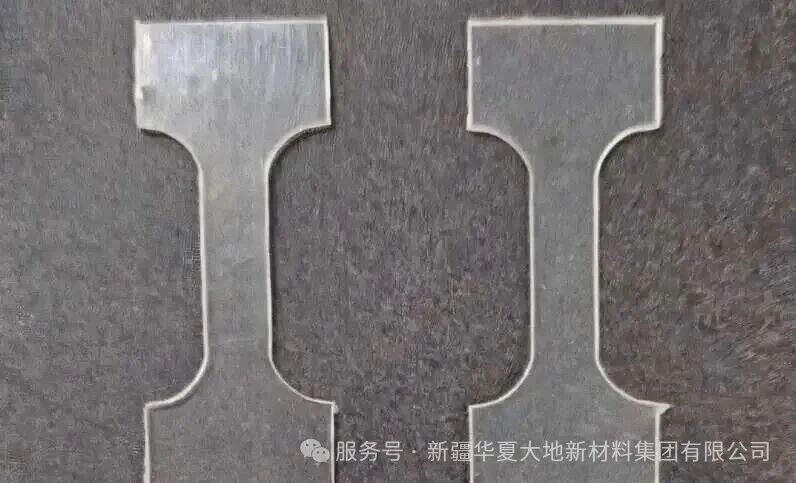
Pure polylactic acid (PLA) plastic on the left typically takes several months to degrade in industrial composting environments; however, modified PLA (right sample), blended with a small amount of organic additive, degrades significantly faster, within three weeks. Image source: Jinsol Yook
Compostable plastics hold promise for alleviating the global plastic waste crisis, but existing materials can only degrade in specialized industrial composting facilities. To develop plastics suitable for home composting, researchers have published findings in ACS Central Science: by adding a small amount of a specialized additive to poly(lactic acid) (PLA), a widely used biobased compostable polymer, they demonstrated that the additive significantly accelerates PLA degradation without compromising key material properties such as strength and transparency.
Mark Hillmyer, the paper's corresponding author, said: "We have enabled polylactic acid to degrade efficiently under conventional composting conditions while retaining its excellent properties suitable for a wide range of consumer products."
Polylactic acid (PLA) is currently widely used in food packaging, textile fabrics, and medical consumables, accounting for approximately two-thirds of the global total production of bio-based, biodegradable plastics. Hilmer explained: "Composting is one of the optimal disposal methods for PLA products, especially suitable for single-use items contaminated with food residues, as it eliminates the need for additional sorting and cleaning processes, ultimately converting organic waste into environmentally friendly substances such as low-molecular-weight organic acids."
But he also pointed out the shortcomings: "PLA can only degrade in artificially controlled industrial composting environments, a process that takes several months." This bioplastic requires high temperature and humidity conditions to fully decompose within a reasonable timeframe.
"Masked Acid" Technology Solution
To address this limitation, Hillmer and Christopher Ellison's team developed a new modified PLA material that degrades faster and is suitable for a wider range of environments.
The research team did not directly add organic acids—doing so would damage the PLA substrate during processing—but instead blended a trace amount of organic anhydride with PLA. These substances are known as "masked acids," which only become activated upon contact with water, catalyzing the breakdown and degradation of the plastic polymer chains.
Researchers prepared two types of PLA films doped with phthalic anhydride and 2-sulfo benzoic acid cyclic anhydride, respectively. Compared to pure PLA film, both modified films fully retained their original mechanical properties, exhibiting both high strength and high transparency.
Can rapidly degrade even in low-temperature environments
2 - The sulfobenzoic acid cyclic anhydride additive shows particularly outstanding performance, becoming effective at a concentration as low as 100 ppm.
Under industrial composting conditions at 58°C, PLA samples containing 0.1% of this additive completely degraded within 21 days; unmodified pure PLA achieved only 83% biodegradation after 90 days.
The research team also verified that the degradation performance of modified PLA significantly improves at 45°C, a temperature within the normal range for household composting.
The researchers stated that this technology can broaden the practical applications of PLA, enabling it to degrade not only in industrial composting facilities but also in household compost bins. However, further experiments are still needed to clarify the actual performance of modified PLA under various scenarios and natural conditions.
Publication Information:
Jinsol Yook et al., "Significant Enhancement of Hydrolysis and Biodegradation of Polylactic Acid by Using Low-Level Organic Anhydrides as Masking Acids," ACS Central Science (2026). DOI: 10.1021/acscentsci.6c00395