


The soil white pollution and residual film accumulation problems caused by traditional polyethylene (PE) agricultural films have become a key bottleneck restricting the sustainable development of agriculture. Biodegradable agricultural films, as a green alternative solution, with the core goal of "meeting the functional requirements during the usage period and complete degradation after harvest", can not only meet the agricultural production needs of moisture retention, temperature increase, and weed control, but also achieve environmental-friendly effects without residual films and microplastics, and help implement the "carbon neutrality" strategy in the agricultural field. This article systematically elaborates on the requirements for polymer materials of biodegradable agricultural films, the selection logic, the necessity of modification, the modification methods, application cases, and the achieved effect of goal attainment. Combined with industry standards and field practices, it clarifies the technical feasibility and application value of these films.
Core performance requirements of the material
Biodegradable films for agriculture need to balance both field usability and environmental friendliness. A single polymer material is unable to meet all the stringent requirements. The core performance requirements are divided into 6 categories, each with clear quantitative standards:
Mechanical properties
The material should be able to withstand mechanical tension, wind force and the stress of crop growth during its growth period. The initial tensile strength should be ≥ 12 MPa, and the elongation at break should be ≥ 200%. If the strength is too low, it is prone to breakage; if the toughness is too high, it will delay degradation.
2. Controllable Degradability
The core characteristics of the film mulch require that within 60 to 180 days under field temperature and humidity conditions, a quality loss of over 90% must be achieved, with the molecular weight reduced to below 10 kDa; the degradation products must be non-toxic, maintain a neutral soil pH, and have no microplastic residues; the degradation rate is determined by the chemical structure of the polymer, crystallinity, soil temperature and humidity, and microbial activity.
3. Optical Properties
The transmittance in the 400 - 700 nm visible light band is ≥ 85%, which ensures the photosynthesis of crops while blocking the light needed for the growth of weeds.
4. Water Vapour Transmission Rate (WVTR)
It should be controlled within the range of 300 to 800 g·m⁻²·day⁻¹. This balance ensures both soil moisture retention and root respiration. If it is too low, it may cause the soil to become overly moist; if it is too high, the soil moisture retention function will fail.
5. Processing Adaptability
Adapted to the blown film molding process, the melt flow rate (MFR, 190℃/2.16 kg) is controlled within 2 to 8 g/10 minutes to ensure large-scale production.
6. Environmental Friendliness
The degradation products have no ecological toxicity. The production raw materials are prioritized to be sourced from bio-based resources, thereby reducing the carbon footprint throughout the entire life cycle.
Characteristics of mainstream candidate biodegradable polymer materials
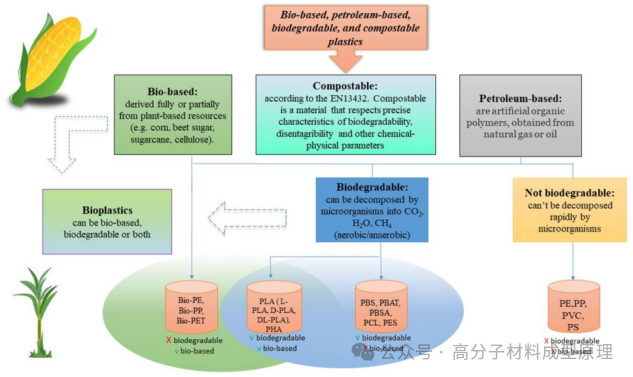
Figure 1 Classification system of biobased, petroleum-based and degradable/non-degradable plastics
At present, the core materials of agricultural degradable films are poly(lactic acid) (PLA), polybutylene adipate/trimethylene terephthalate (PBAT), and polyhydroxyalkanoates (PHA). These three materials have complementary properties but all have their own limitations and cannot independently meet the requirements of agricultural films:
Polylactic acid (PLA)
Raw materials: Bio-based resources such as corn and sugar cane, which are compostable and can be completely degraded into CO₂ and water;
Advantages: High mechanical strength, high modulus, and environmentally friendly biobased property;
Defects: High brittleness (notch impact strength < 3 kJ/m²), almost no degradation in ambient soil (degradation period > 240 days), low melt strength making it difficult to blow film.
Adaptability: It needs to be modified before it can be used as a ground film substrate.
Polybutylene terephthalate / Dimethyl terephthalate
Ingredients: Petroleum-based synthetic polyester, which can be degraded by microorganisms in the soil;
Advantages: Good flexibility, excellent film-forming processing performance;
Defects: Mechanical strength does not meet the standard; the soil mineralization rate within 24 weeks is only 40% (likely to retain microplastics); poor water permeability and air permeability.
Adaptability: It requires blending and modification to enhance strength and ensure complete degradation. This is currently the most crucial resilient component of the plastic film.
Polyhydroxyalkanoates (PHA)
Ingredients: Microbial-synthesized biopolyester, with excellent biocompatibility;
Advantages: The natural environment can be completely degraded, and the mechanical properties and degradation performance are balanced.
Defects: High production cost, poor thermal stability, narrow processing window, making it difficult to achieve large-scale industrialization.
Adaptability: Only applicable to high-end modified formulations. It has not yet become a mainstream substrate.
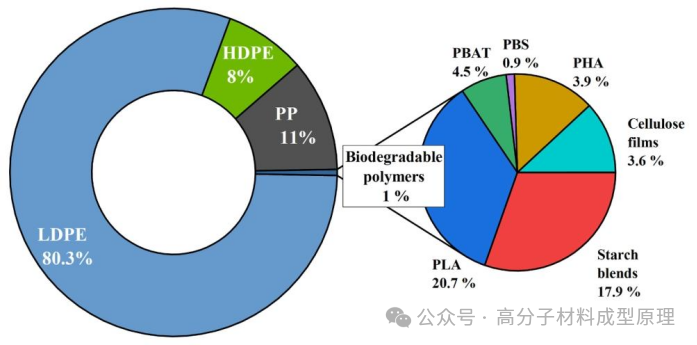
Figure 2 Proportion of biodegradable agricultural polymers in Europe and degradation performance of core polymers
The necessity of modification and specific modification techniques
A single polymer material cannot simultaneously meet the three core requirements of mechanics, degradation and processing. It is necessary to achieve performance complementarity through modification. Currently, the mainstream modification technologies in the industry are divided into 4 categories. Among them, blending modification is the preferred choice for industrialization:
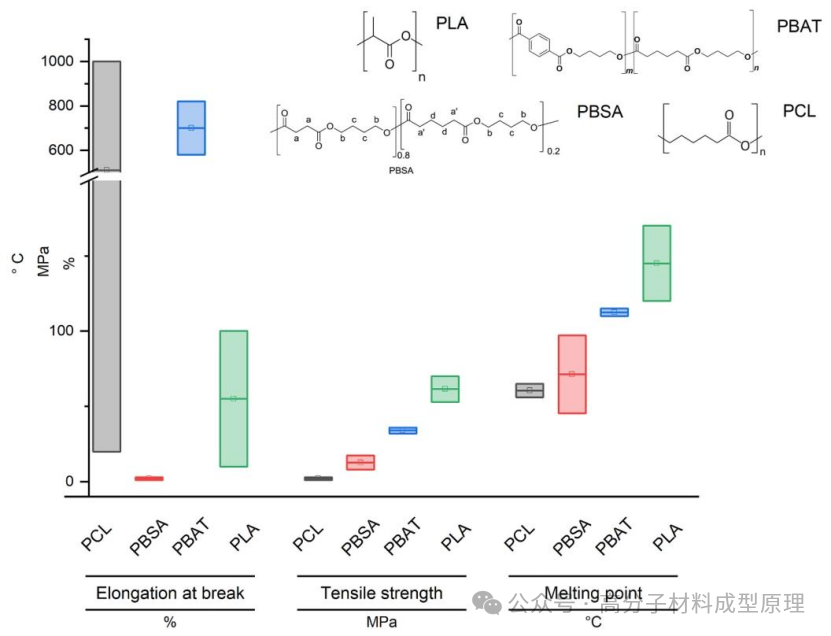
Figure 3 Box plot of mechanical properties of the main synthesized degradable polymers
Blending modification
Mixing two or more polymers physically or through reactions to achieve complementary properties is the core technology for industrial mass production.
PLA/PBAT Reactive Blending
Utilizing PBAT to compensate for the brittleness of PLA, and enhancing the strength of PLA by adding PBAT; adding diphenyl dichloro sulfide (DCP, 0.5 - 1.5 wt%) as a reactive additive to promote in-situ grafting of the two phases, the elongation at break increased from 20% to 450%, and the degradation period was precisely controlled within 90 - 120 days.
Blending of natural fillers
Add 1 to 3 wt% of natural fillers such as starch and nanocellulose to reduce costs and accelerate degradation; the fillers need to be silanized to prevent agglomeration.
Plasticizing modification
To address the brittleness issue of PLA, bio-based plasticizers (plant oil derivatives, PEDALIUM MUREX plant-based plasticizers) are added to lower the glass transition temperature of PLA, enhance its flexibility and processability. However, the risk of plasticizer migration must be strictly controlled.
Modification of nanocomposite materials
Adding nano-fillers such as calcium carbonate, silica, lignin, and montmorillonite can enhance the mechanical, thermal stability, antibacterial, and UV resistance properties of the film. For instance, 20 wt% alkali-pretreated lignin-modified PBAT can simultaneously improve the mechanical properties and antibacterial performance.
Surface modification and functionalization
The grafting of hydrophilic groups accelerates the hydrolytic degradation.
2. Incorporating herbicide (MCPA) for achieving sustained herbicidal effect;
3. The multi-layered assembly of the coating provides fire resistance and anti-aging properties.
The combined influence of environment and agronomy
Environmental friendliness: Biodegradable films will briefly produce microbial plastics (MBPs), but eventually they will completely mineralize into CO₂ and water, leaving no permanent residues, which is different from the long-term pollution caused by PE microplastics.
2. Soil Impact: Long-term use can increase the total nitrogen, available phosphorus and potassium content in the soil, enhance the microbial activity in the soil, and does not damage the physical and chemical properties of the soil.
3. Agricultural effects: Compared to bare land, the degradable plastic film can increase yield by 8 to 30%, improve moisture retention rate by 20 to 40%, and achieve an herbicide control rate of over 85%; compared to PE plastic film, the agricultural effects are the same, and it also saves the labor cost for residual film recycling.
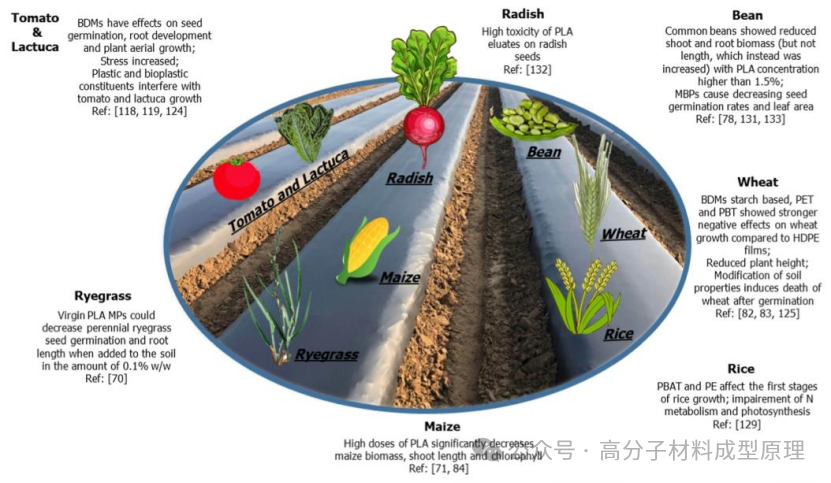
Figure 4 Summary of the effects of biodegradable mulching films on plant growth and germination
Summary
The high-molecular materials for biodegradable agricultural land films need to meet six core requirements: mechanical properties, degradation, optical properties, moisture permeability, processing, and environmental protection. The PLA/PBAT blend system is currently the most suitable base material combination. A single material cannot be directly applied; reactive blending modification is the core technology to achieve performance standards. Through industrialization modification and formulation optimization, the land film can fully achieve the expected goal of "functionality meeting during the usage period and complete degradation after harvest", and has been applied on a large scale both domestically and internationally. In the future, efforts should focus on low-cost modification, climate-adaptive formulations, and functional upgrades, to further promote the industrialization process of replacing traditional PE land films.
References
[1] Madin, M., Nelson, K., Fatema, K., Schoengold, K., Dalal, A., Onyekwelu, I., Rayan, R., & Norouzi, S. S. (2024). Synthesis of current evidence on factors influencing the suitability of synthetic biodegradable mulches for agricultural applications: A systematic review. Journal of Agriculture and Food Research, 16, 101095.
[2] Campanale, C., Galafassi, S., Di Pippo, F., Pojar, I., Massarelli, C., & Uricchio, V. F. (2024). A critical review of biodegradable plastic mulch films in agriculture: Definitions, scientific background and potential impacts. TrAC Trends in Analytical Chemistry, 170, 117391.
[3] Akhir, M. A. M., & Mustapha, M. (2022). Formulation of Biodegradable Plastic Mulch Film for Agriculture Crop Protection: A Review. Polymer Reviews, 62(4), 890–918.