
What exactly can biomanufacturing change?
At the launch ceremony of the 2026 Biomanufacturing Competition, Chinese Academy of Sciences academician and professor at Shanghai Jiao Tong University Deng Zixin gave an intuitive explanation: Synthetic biology shares similarities with civil engineering and mechanical engineering. Both involve designing blueprints based on requirements and then organizing materials and building systems according to the blueprints. The difference is that traditional engineering uses bricks, cement and mechanical parts, while synthetic biology uses genes, proteins, regulatory elements and cell chassis.
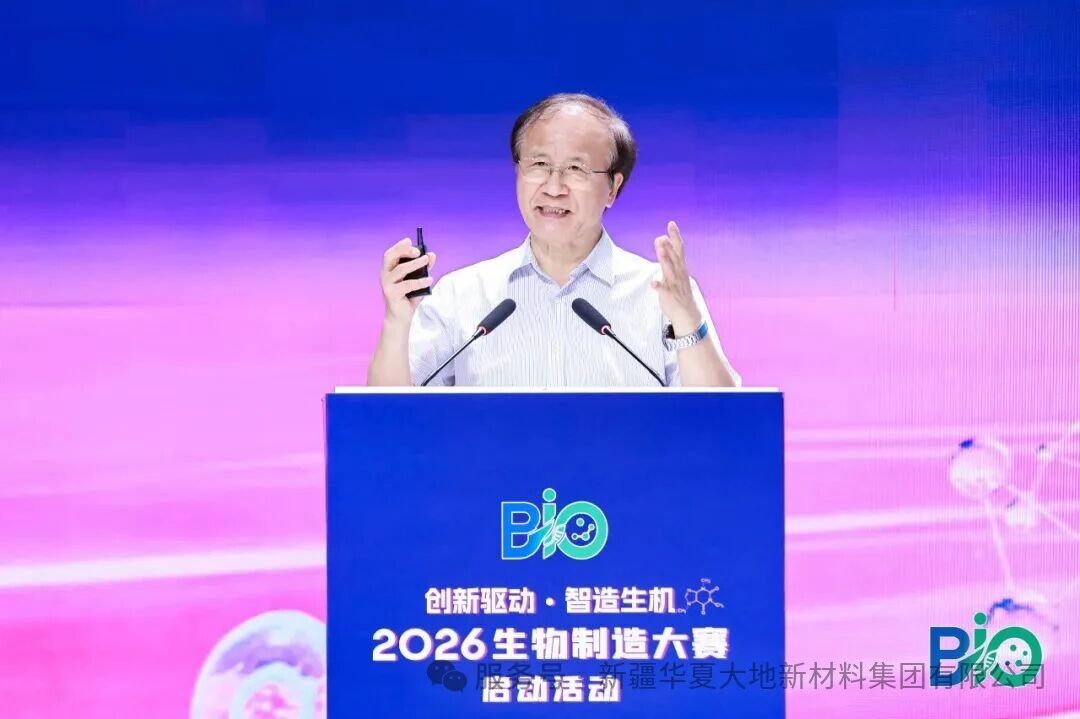
This means that the life system is being engineered, just like building blocks, being redesigned and reassembled.
In the past, when humans discovered new drugs, new functional components, and new agricultural products, they often relied on screening from plants, animals, and microorganisms. Classic achievements such as penicillin, streptomycin, avermectin, and artemisinin were all closely related to natural screening. However, this model also has obvious limitations: discovery is difficult, cultivation is difficult, the process is complex, resource consumption is high, and after entering production, there may also be problems such as pollution, emissions, safety and cost.
Academician Deng Zixin pointed out that biomanufacturing is changing this traditional approach. With the development of genomics, big data, high-throughput screening, automated platforms and AI technologies, biomanufacturing is shifting from "searching for microorganisms" to "searching for genes", from "passive screening" to "active design", and from "utilizing natural microorganisms" to "artificially designing and generating microorganisms".
1. From "Natural Acquisition" to "Active Design"
In the opinion of Academician Deng Zixin, biomanufacturing is the engine of big health innovation and also an important driving force for new quality productivity.
Its value lies not merely in discovering a new molecule, but in changing the source and production method of the product. Through genetic programming and cell factory construction, some natural substances originally derived from plants can be produced by microorganisms in a manner similar to "winemaking". This is what he referred to as "reproducing offspring through the womb, achieving great success with small efforts".
For instance, some flavor substances, natural active ingredients, agricultural active substances and health-related products, which originally required a large amount of plant raw materials for extraction, were greatly affected by factors such as planting cycle, origin, climate and supply chain. Through synthetic biology methods, the relevant genes can be inserted into chassis cells like yeast, allowing microorganisms to produce the target products. This can enhance production efficiency, reduce resource consumption and improve supply stability.
Behind this lies a deeper change: products are no longer merely "found", but can be "designed" instead.
II. From "Production Capabilities" to "More Efficient and Greener Production"
The value of biological manufacturing lies not only in replacing raw material sources, but also in driving the upgrading of the entire industrial chain.
In his speech, Academician Deng Zixin mentioned that biomanufacturing can be used to improve product quality, reduce ineffective components, optimize production processes, and lower pollution emissions. It can also facilitate the transition from traditional chemical synthesis routes to biological synthesis routes. For instance, in products such as artificial sweeteners and vitamin E, the biological synthesis route has the potential to shorten the production process, reduce energy consumption and safety risks. Through microbial fermentation or biological transformation, complex pathways can be made simpler, more economical, and more environmentally friendly.
Biological manufacturing can also address practical problems in traditional fermentation industries. For instance, during the production of some antibiotics, there are issues such as odor emissions, tail gas treatment, and biological contamination. Through genomic analysis and gene editing, the key steps that cause odor or pollution risks can be identified, and these can be modified without affecting the production of the main product.
These cases demonstrate that biomanufacturing is not just a cutting-edge concept confined to the laboratory, but is actually solving real-world problems in the industry: reducing costs, minimizing pollution, enhancing stability, and improving safety.
III. Mission of the Competition: Turning "A Small Step" into "A Big Step"
In his speech, Academician Deng Zixin mentioned that when synthetic biology and biomanufacturing are combined, scientists and engineers need to collaborate to "wire" and "program" the organisms. The goal is to produce drugs, food, health products, and green energy more efficiently, economically, and environmentally, and to provide new methods for the diagnosis and treatment of major diseases.
This statement also highlights the key to the industrialization of biomanufacturing: Technological breakthroughs are just the beginning; what truly matters is converting the technology into products, processes, platforms and industrial capabilities.
Currently, biomanufacturing has entered a crucial stage from scientific breakthroughs to industrial implementation. On one hand, the underlying technologies are accelerating their development, including gene editing, cell factories, enzyme engineering, AI-driven design, digital process platforms, etc.; on the other hand, the application scenarios are constantly expanding, covering functional raw materials for food and daily care, bio-based materials, green agriculture, domestication of key equipment and reagents, life health, and other directions.
This is precisely the significance of the 2026 Biomanufacturing Competition in establishing and setting up two tracks: cutting-edge technology and application innovation.
For the research team, this is an opportunity to bring the laboratory results into the industrial application scenario.
For innovative enterprises, this is an opportunity that has been noticed by capital, the park, and the market.
For large enterprises and local industries, this is an opportunity to discover new technologies, new products and new scenarios.
The future of biomanufacturing will not rely solely on a single breakthrough in a specific technology, but rather on a combination of scientific discoveries, process scaling, scenario validation, and systematic collaboration of industrial resources.
Just as Academician Deng Zixin said, "A small step in original innovation could potentially be a major step for industrial development."
What the 2026 Biomanufacturing Competition aims to do is to refine, elevate and fuse these "small steps", so that more innovations can truly enter the industry, enter the market and bring about a better life.
The article is reprinted from: Chinese Academy of Agricultural Sciences