

Each year, over 46 million tons of plastic are produced, of which nearly 19 million tons eventually leak into rivers, oceans, soil and the air. They turn into microplastics and enter the food chain, affecting biodiversity and also human health and livelihoods. And according to the current trend, by 2060, global plastic usage could potentially increase by another three times.
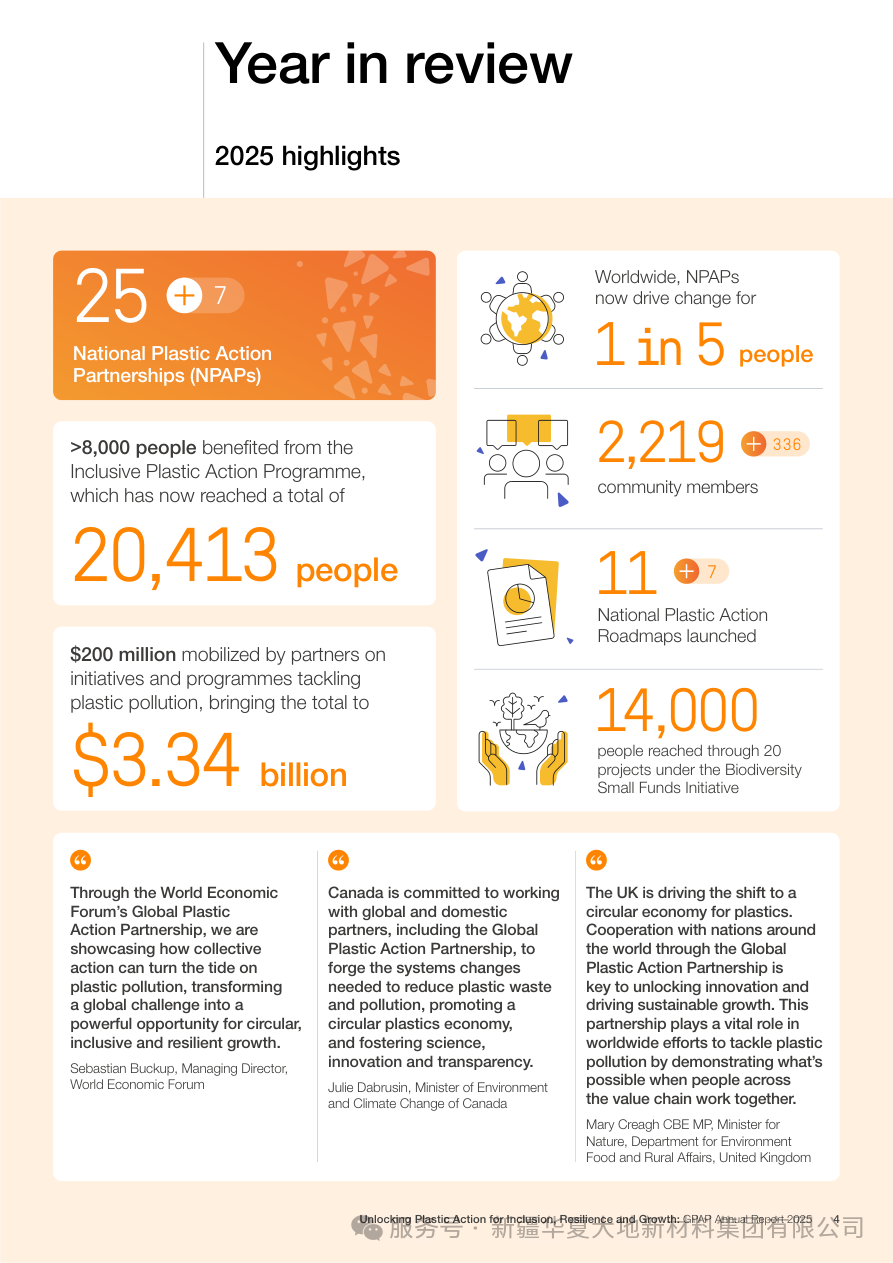
This sounds like the opening scene of a disaster film. But in 2025, a global action network involving 25 countries is transforming this crisis into an opportunity for economic and social transformation. This network is - the Global Plastic Action Partnership (GPAP). Initiated by the World Economic Forum in 2018, it now covers 25 countries in Africa, Asia and Latin America, affecting over 1.5 billion people and has become the largest multi-stakeholder platform globally dedicated to ending plastic pollution.
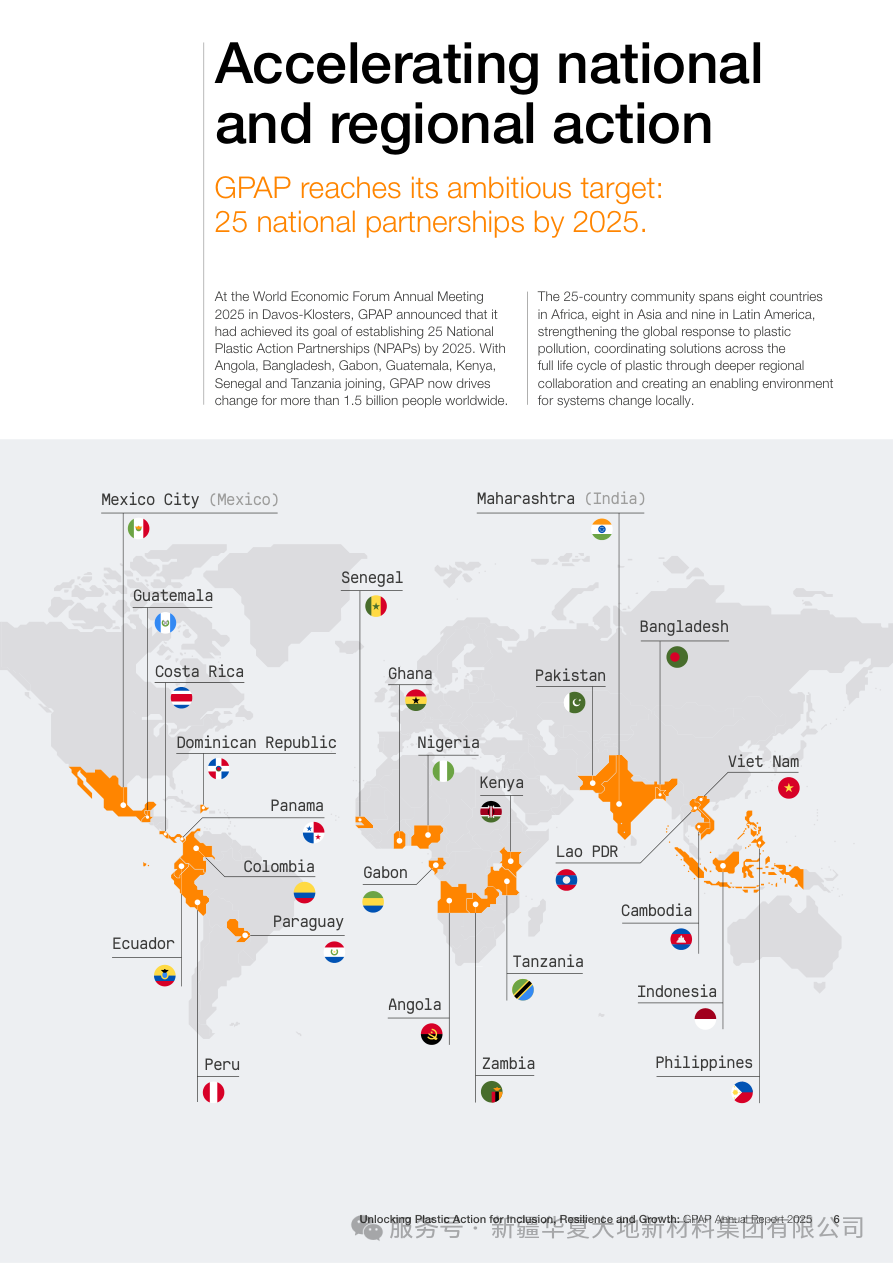
In 2025, GPAP reached its most significant milestone since its establishment: At the World Economic Forum Annual Meeting in Davos, it announced that it had successfully achieved the goal of "establishing 25 national plastic action partnerships by 2025". Angola, Bangladesh, Gabon, Guatemala, Kenya, Senegal and Tanzania joined this year, bringing the total number of national partners in Africa, Asia and Latin America to 8, 8 and 9 respectively. These countries did not passively accept external plans; instead, they were led by their own governments, enterprises, civil society and communities, based on local data, local needs and local culture, to formulate their own plastic governance roadmaps.
When plastic is everywhere, solutions are also emerging in abundance. The concept of GPAP is clear: plastic pollution is not only an environmental issue, but also an economic and social opportunity. By shifting to a circular economy, we can create new markets, new jobs, protect ecosystems, and achieve inclusive growth.
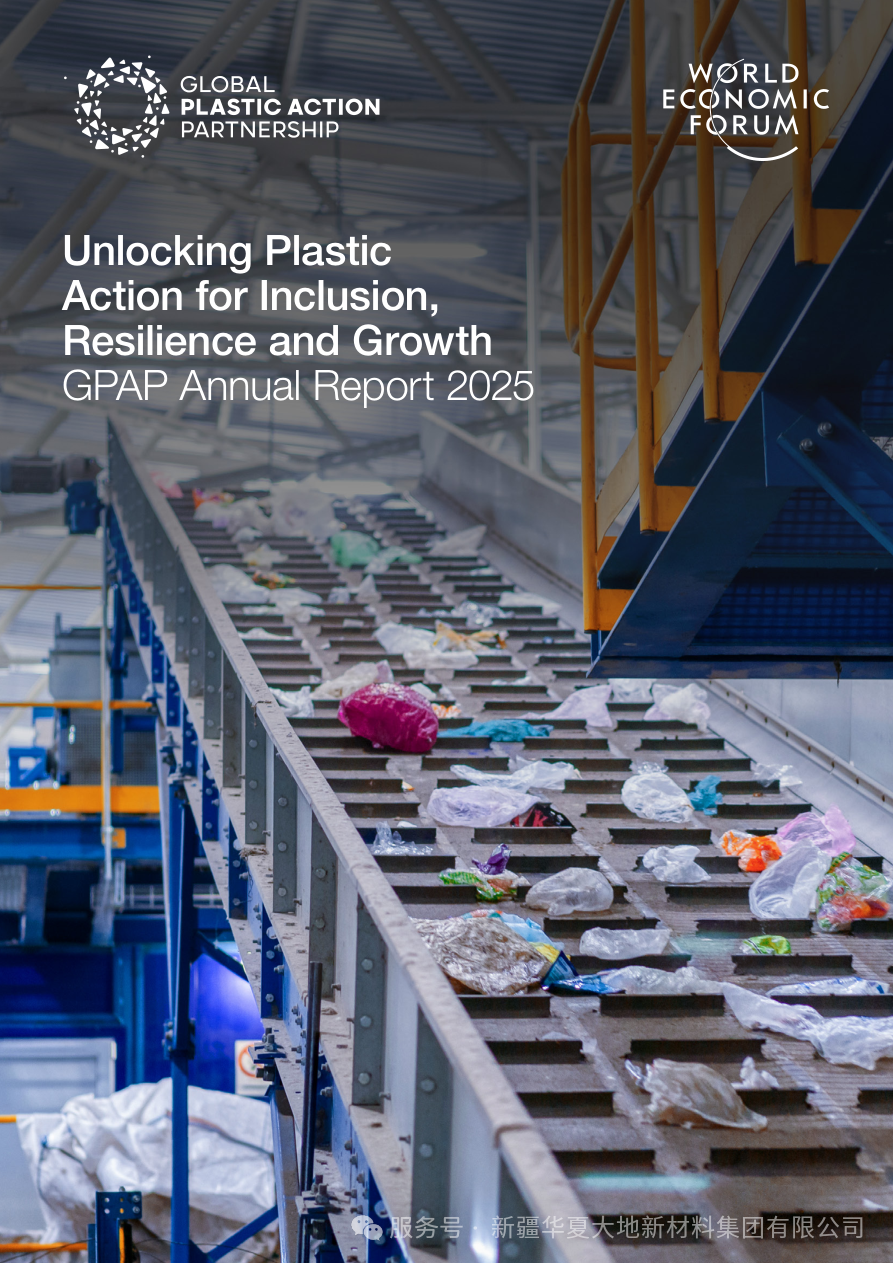
The "2025 Annual Report of the Global Plastic Action Partnership" outlines the progress made by the Global Plastic Action Partnership (GPAP) in jointly ending plastic pollution at the national, regional and global levels. The report highlights GPAP's evidence-based working model, which includes the release of seven brand-new "National Plastic Action Roadmaps". These roadmaps are based on data and provide clear paths for improving resource recycling rates, reducing pollution and creating green jobs. The report also emphasizes the significance of inclusive actions and showcases the partnership's achievements in promoting gender equality, nurturing youth leadership and driving innovation at the community level.
Two particularly noteworthy figures:
Over 3.34 billion US dollars - this is the total amount of funds that the partners of the GPAP have collectively mobilized in various plastic management projects and initiatives.
More than 20,000 people - this is the number of people directly benefiting from the "Inclusive Plastic Action Plan" of GPAP. The vast majority of them are women, young people and informal recyclers.
In addition, GPAP has supported 20 local projects through the "Biodiversity Small Grants Fund", benefiting 14,000 people and helping them address the dual challenges of plastic pollution and biodiversity loss at the community level.
Behind these figures lie countless vivid stories: The "invisible female soldiers" from Vietnam were seen in the documentary; female recyclers in Nigeria obtained professional certifications; residents in Peru learned about garbage classification and recycling at the "Recycled Plastic Festival".
Asia: 45% of global plastic waste, and 45% of hope for solutions
Asia generates between 110 million and 120 million tons of plastic waste each year, accounting for almost half of the global total. This means that the success of Asia's transformation directly determines the direction of the global plastic crisis.
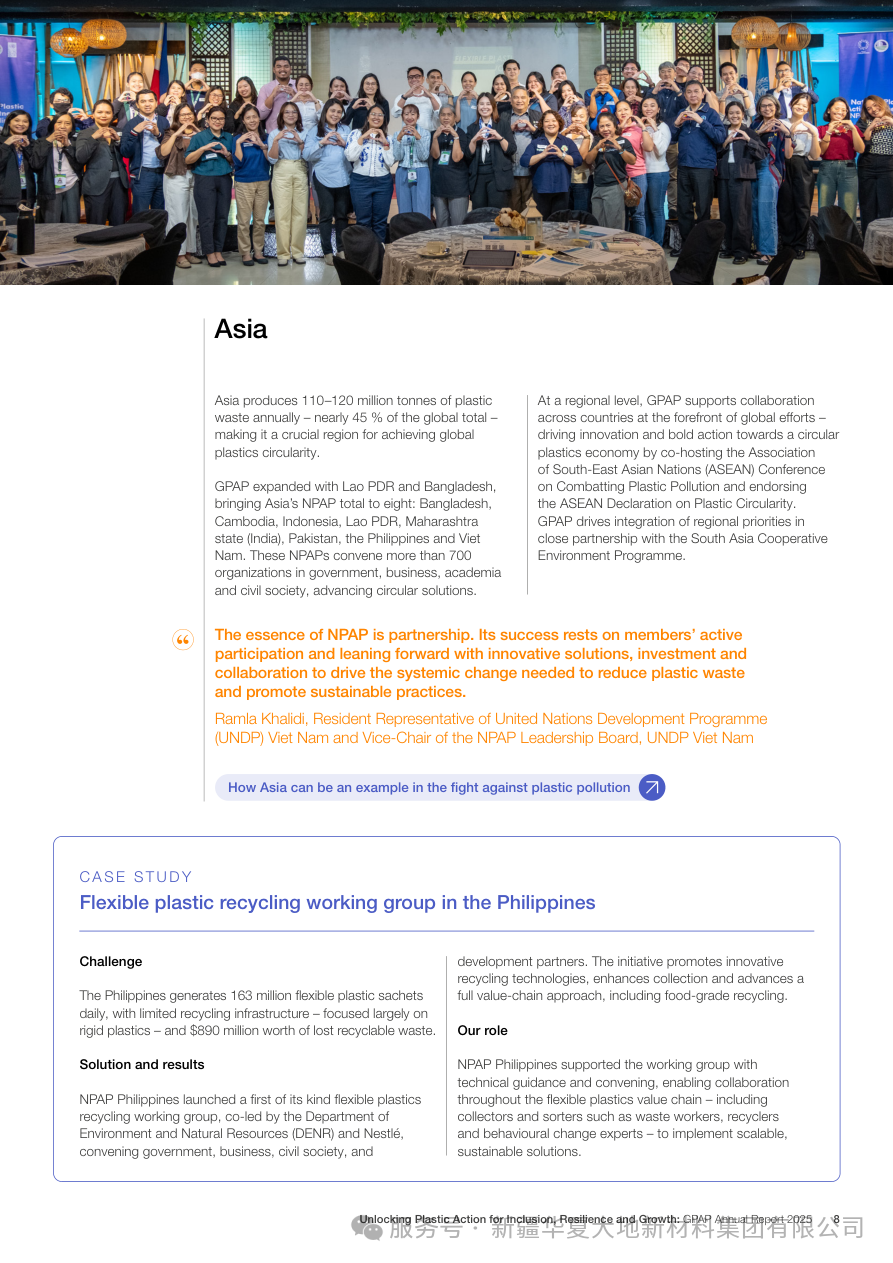
In 2025, Laos and Bangladesh joined the GPAP, bringing the total number of Asian NPAPs to 8 (including Cambodia, Indonesia, Pakistan, the Philippines, Vietnam, and Maharashtra in India). These platforms have brought together over 700 governments, enterprises and civil society organizations to jointly promote circular solutions.
A typical case comes from the Philippines. This country generates 163 million flexible plastic small packages (such as shampoo bottles, coffee bags) every day, but the recycling infrastructure is almost exclusively focused on hard plastics, resulting in a loss of up to 890 million US dollars annually. Therefore, NPAP Philippines launched an unprecedented "Flexible Plastic Recycling Working Group", led jointly by the Department of Environment and Natural Resources and Nestlé, involving all participants along the entire value chain, such as recyclers, waste workers, and behavior change experts, to promote innovative recycling technologies and full-chain solutions.
At the regional level, GPAP jointly hosted the ASEAN Plastic Pollution Prevention Conference and supported the adoption of the "ASEAN Plastic Circularity Declaration". In South Asia, GPAP worked closely with the South Asia Cooperation for Environment Program to promote the integration of regional priorities.
The UNDP representative in Vietnam, Ramla Halidi (who also serves as the vice-chairperson of the NPAP Vietnam Leadership Committee), commented: "The essence of NPAP is partnership. Its success depends on the active participation of its members, as well as their willingness to drive system change through innovative solutions, investment, and collaboration."
Africa: From the Waste Crisis to Leadership by Standards
In Africa, approximately 19 million tons of plastic waste is generated each year, with nearly 90% of it being dumped in the open, burned, or washed into rivers and oceans. This not only poses a threat to the renowned wildlife habitats but also affects the drinking water and health of hundreds of millions of people.
However, Africa is also becoming a pioneer in the plastic circular economy.
Kenyan President William Ruto stated in the report: "Kenya is committed to addressing the issue of plastic pollution. We recognize that partnerships like GPAP are crucial for translating collective aspirations into concrete solutions."
In 2025, GPAP collaborated with African Standards Organization, African Circular Economy Alliance, and the African Union, among others, and successfully formulated the first food-grade recycled PET standard in Africa (DARS 1721:2024). This standard unified the safety requirements and testing methods for recycled PET used in food-contact materials, which will significantly promote the trade of recycled plastics in the region and clear the way for investment and innovation.
In Nigeria, GPAP assisted the Federal Ministry of Environment in releasing the National Plastic Action Roadmap. Through modeling analysis, Nigeria has identified four priority intervention measures: reducing consumption, adopting alternatives, expanding recycling, and ensuring safe disposal. If the roadmap is fully implemented, by 2040:
The plastic recycling rate will increase from 10% to 58%.
Plastic pollution has decreased by 67%.
Greenhouse gas emissions have decreased by 39%.
Create nearly 97,000 new job positions.
Nigeria's Environment Minister, Bararaabe Abbas Lawal, said: "We have the will. The roadmap is the direction."
Latin America: Actions at every hotspot from rainforests to rivers
In Latin America and the Caribbean, nearly 8 million tons of unprocessed plastic waste is generated each year, and approximately 40 million people lack proper waste collection services. Open burning and uncontrolled disposal pose threats to the unique biodiversity of the Amazon, the Andes Mountains, the Motagua River, and the Galápagos Islands.
GPAP already has 9 NPAPs in Latin America: Guatemala, Ecuador, Panama, Costa Rica, the Dominican Republic, Paraguay, Peru, Colombia and Mexico City. These platforms provide evidence-based roadmaps, facilitate cross-sectoral cooperation, and mobilize funds for circular solutions.
In Peru, NPAP collaborated with the Balanco government to hold the "Plastic Recycling Festival". This festival attracted 2,000 participants and collected over 500 kilograms of recyclable materials through interactive booths, workshops and art activities. Enterprises, civil society and public institutions showcased practical recycling solutions on-site. Through such activities, NPAP Peru transformed national policies into local actions and strengthened cooperation among citizens, municipal authorities and the private sector.
Patricia Olantes, the Minister of Environment and Natural Resources of Guatemala, said: "The NPAP for Guatemala has come at the right time. It is a participatory space and mechanism that can generate and share technical information and knowledge related to plastics."
At the regional level, GPAP leads the plastic working group of the Latin America and Caribbean Circular Economy Alliance, coordinating priorities, sharing knowledge and unlocking investment.
The Power of Data: 11 Roadmaps and a Clear Vision for 2040
One of the core methodologies of GPAP is "National Analysis and Modeling" (NAM). This set of digital tools helps countries visualize plastic flows, assess environmental impacts, and explore scenarios of different intervention measures.
By 2025, 11 countries or regions have released national plastic action roadmaps, including the newly released ones from Nigeria, Pakistan, Mexico, Costa Rica, Panama, and the Dominican Republic, as well as the earlier ones from Ecuador, Ghana, Indonesia and Vietnam.
Each roadmap includes a clear comparison from "business as usual" to "system transformation", as well as specific predictions of economic, social and environmental benefits. Some typical goals are as follows:
Pakistan: By 2040, achieve a 64% plastic recycling rate, reduce over 76% of improperly disposed waste, reduce government costs by 40%, create 300,000 jobs (including the regularization of informal recyclers), and reduce greenhouse gas emissions by 84%.
Mexico City: Increase the plastic recycling rate from 24% in 2022 to 84% by 2040, reduce 80% of improperly disposed waste, lower the cost of waste management by 50%, and reduce emissions by 26%.
Costa Rica: The recycling rate has increased from 12% to 54%, plastic pollution has decreased by 91%, emissions have been reduced by 24%, 17,000 new jobs have been created, and the government has saved over 170 million US dollars.
Panama: Recycling rate 58%, plastic pollution reduced by 86%, emissions reduced by 54%, created 63,000 new jobs, and waste management costs saved by 48%.
Dominican Republic: The recycling rate has increased from 6% to 53%. The improper disposal of waste has decreased by 87%. Costs have been reduced by 31%. Emissions have been reduced by 37%. Approximately 16,000 new jobs have been created.
These figures are not mere fantasies but are based on real data from various countries and feasible paths jointly formulated by local stakeholders.
The human dimension: Gender equality and social inclusion
Plastic pollution is never neutral. The most vulnerable groups - women, informal recyclers, slum dwellers, indigenous people - often bear the heaviest burden, yet they are also the most resilient solution-makers.
GPAP regards "gender equality and social inclusion" as one of its core principles. In 2025, with the support of the Department for Environment, Food and Rural Affairs of the UK, the "Inclusive Plastic Action Plan" continued to expand in scale, and at the New York Conference on Sustainable Development Impact, it announced the "Top 10 Champions" for 2025, recognizing those exemplary models of a people-oriented circular economy.
GPAP has also released seven GESI assessment reports, covering Ghana, Indonesia, Vietnam, Maharashtra in India, Nigeria, Pakistan and Peru. These assessments help countries identify gender blind spots in plastic governance and design more inclusive policies and projects.
A touching example is the short documentary "The Invisible Warriors". It documents the daily lives of Vietnamese female recyclers - they get up before dawn, move through the city's garbage dumps, sort plastics by hand, and keep the entire recycling system running. However, they have been largely unseen and unrecognized for a long time. Through the dissemination of GPAP, these "invisible warriors" began to receive the respect and support they deserved.
Mary Olushajo, the founder of the "African Women's Power Network" in Nigeria, said: "We are extremely grateful for the financial support from GPAP and the British government. Without it, the EcoAction Summit would not have been possible."
Plastics and Biodiversity: Two Sides of the Same Coin
Plastic pollution and biodiversity loss are a pair of intertwined crises that mutually exacerbate each other. Once plastics enter the ecosystem, they can entangle and harm animals and plants, destroy habitats, and the decline in biodiversity further weakens the buffering capacity of natural systems against pollution.
With the support of the Global Affairs Department of Canada, GPAP was the first to conduct a systematic study on the connection between plastics and biodiversity. In 2025, nine national-level assessments were initiated in Colombia, Ecuador, Peru, Costa Rica, Nigeria, Indonesia, the Philippines, Vietnam and Maharashtra, India. These studies will quantify the impact of plastics on ecosystem services and propose integrated solutions.
Meanwhile, GPAP launched the "Biodiversity Micro-Fund", selecting 20 projects from 176 applications submitted by eight countries. These projects benefited over 14,000 people and addressed plastic and biodiversity challenges through activities such as community clean-up, mangrove restoration, and environmental education.
At the 2025 World Conservation Union (IUCN) World Conservation Conference, the GPAP organization held a special discussion titled "The Hidden Costs of Plastic Pollution and Biodiversity Loss: Economic and Policy Impacts". The chairperson of IPBES, David Obura, pointed out: "The total mass of man-made materials is now roughly equivalent to the combined mass of all living organisms on Earth (animals, plants, fungi, and bacteria)."
Financing: A demand of 150 billion US dollars per year
Building a plastic circular economy requires a huge amount of funds. It is estimated that globally, approximately 150 billion US dollars are needed each year, but the funds currently raised are only a fraction of that.
For this purpose, GPAP established a "Financing Coordination Group", which collaborated with the OECD, the UNEP Financial Initiative, the World Bank and the Circulate Initiative to promote knowledge sharing and capacity building. The group held a series of webinars, attracting 529 participants from 93 countries. During INC-5.1 (Busan) and INC-5.2 (Geneva), the "Finance Day" was held separately, with over 100 people participating in each event.
At the national level, the GPAP supports countries in establishing "financing working groups" and formulating national financing roadmaps. Vietnam, Mexico City, Pakistan and Nigeria are already actively preparing to effectively attract and deploy capital.
At the regional level, GPAP collaborates with the Inter-American Development Bank and the Asian Development Bank to connect financiers and governments, promoting a common investment classification system. In April 2025, GPAP and the UNEP Finance Initiative convened North American banks and investors to discuss the investment portfolio risks brought about by plastic pollution. In May, at the World Circular Economy Forum in São Paulo, GPAP and the Inter-American Development Bank jointly convened financial leaders from Latin America and the Caribbean to coordinate investment methods.
Robert Kaplan, the founder and CEO of Circulate Capital, said: "Preventing plastic pollution is a systemic challenge. Solving it requires systemic solutions, as well as the right financial mechanisms and enabling conditions."
From Responsibility to Opportunity: 4 Key Directions for Enterprise Prioritized Cooperation
The participation of enterprises is the key to the success of GPAP. GPAP has over 300 enterprise partners, mainly from the agricultural food, consumer goods, retail, petrochemical, and waste management industries. By 2025, the automotive, medical, electronics, construction, and tourism sectors have also shown strong interest.
GPAP has identified four priority areas for enterprise cooperation:
Public-private collaboration promotes global plastic treaties and regional policies (such as the Extended Producer Responsibility system);
Technology and innovation (digitalization, artificial intelligence) enhance the efficiency and transparency of the value chain;
Chemical Safety and Health Management;
The hybrid financing mechanism can unleash the potential for green growth.
H. Fisk Johnson, the CEO of SC Johnson, stated: "We have already reduced the use of virgin plastic by 33% from the 2018 baseline, and this reduction will continue to increase by 2030. This is achievable - we welcome the treaty mechanism to assist the entire industry."
Yunju Ko, the Chief Sustainable Strategy Officer of LG Chem, said: "As a company, we view sustainability as a responsibility and also as an opportunity for future business."
Global Governance: Supporting Treaty Negotiations on Plastics
2025 will be a crucial year for the global plastic treaty negotiations. GPAP is actively providing knowledge support and a platform for multi-stakeholder dialogue for INC-5.1 (Busan) and INC-5.2 (Geneva).
In Busan, GPAP, in collaboration with the Financing Coordination Group and the United Nations Conference on Trade and Development, organized the first "Finance and Trade Day", discussing the financing mechanism of the treaty as well as trade and investment considerations. This event attracted over 100 government and business leaders.
Prior to the INC-5.2 in Geneva, GPAP held the "Solution Day", gathering 145 senior-level leaders to showcase the existing financing methods and national policy-making tools.
GPAP also collaborated with the Swiss government to organize two ministerial visits to the PROP industrial recycling facilities, showcasing the specific achievements of upstream investment in innovation and infrastructure. One of these visits was held concurrently with INC-5.2 and attracted over 50 senior participants.
Felix Welterli, the head of the Swiss INC delegation and the environmental ambassador, said: "The plastic treaty has the potential to become a transformative framework for achieving sustainable production and consumption patterns and ending plastic pollution. A treaty with effective measures will drive meaningful actions, provide greater predictability for businesses, trigger investment, and accelerate innovation towards a more sustainable future."
Although the negotiations in Busan and Geneva failed to reach a final agreement, GPAP remains firmly committed to the INC process, and through 25 local insights of the NPAP, promotes public-private collaboration and green growth.
The three priority directions of GPAP2026
In the face of an increasingly complex, fragmented and rapidly changing global environment, GPAP has identified three priorities for the year 2026:
Continue to strengthen and support the 25 National Plastic Action Partnerships, and promote actions based on local ownership, evidence and inclusiveness;
Utilizing the reputation and network of the GPAP, establish a strong community of plastic action leadership, and support the treaty process at both regional and global levels.
Identify emerging issues, accelerate industrial transformation, and unleash growth, competitiveness and innovation.
Furthermore, GPAP will place greater emphasis on the role of technology and innovation, particularly by leveraging the World Economic Forum's Center of Excellence in Artificial Intelligence and the Innovators Community, to assist enterprises in identifying systemic solutions and promoting the economic feasibility of the circular economy.
The 150 million people behind the 150 million people
The 2025 report of GPAP conveys a clear message: Plastic pollution can be addressed through collective action. From the recycling workers in Nigeria to the flexible plastic working group in the Philippines, from the circular economy cycle in Peru to the emission reduction roadmap in Costa Rica, every action is proving that - transformation is not only necessary but also feasible.
Just as Clarence Schmidt, the director of GPAP, stated at the beginning of the report: "Collective action can transform ambition into measurable progress, bringing common prosperity for humanity and the planet." When we look back in 2026, perhaps we will view the stories of these 25 countries as the beginning of a global turning point. Plastic will not disappear, but we can change its fate and also our own fate.